动脉粥样硬化:斑块是怎么形成的
动脉粥样硬化到底是什么
动脉粥样硬化(atherosclerosis,Atherosclerosis动脉粥样硬化 · Atherosclerosis/ˌæθəroʊskləˈroʊsɪs/含胆固醇的脂质与炎症细胞在动脉内膜沉积、逐渐形成斑块使管腔狭窄、血管壁变硬的慢性过程。A chronic process in which cholesterol-rich lipids and inflammatory cells accumulate in the arterial intima, gradually forming plaques that narrow the lumen and stiffen the vessel wall.🧩 词根拆解 / word rootsathero-粥样、脂糊状(指斑块柔软的脂质核) · gruel/porridge (the soft fatty core)希腊语 athērē 粥/糊+scler(o)-硬化、变硬 · hardening希腊语 sklēros 硬+-osis(病理性)状态、过程 · abnormal condition/process希腊语 -ōsis)是一种常见疾病:当一种黏 性的“斑块”(plaque)在动脉里逐渐堆积时,它就发生了。[1]Tier 3National Heart, Lung, et al. Atherosclerosis --- What Is Atherosclerosis?. 2024https://www.nhlbi.nih.gov/health/atherosclerosis 这种斑块 由血液中的脂肪、胆固醇(cholesterol,Cholesterol胆固醇 · Cholesterol/kəˈlɛstərɒl/一种脂质分子,是细胞膜、类固醇激素和胆汁酸的必需成分;因不溶于水,需由脂蛋白在血液中运输。A lipid molecule essential for cell membranes, steroid hormones, and bile acids; being water-insoluble, it must be transported in the blood by lipoproteins.🧩 词根拆解 / word rootschole-胆汁(最早从胆结石中分离) · bile希腊语 kholē 胆汁+stere(o)-固体、坚硬 · solid/stiff希腊语 stereos 固体+-ol醇(化学后缀,表示这是一种醇) · an alcohol (chemistry))、钙以及其他物质构成,会在 动脉壁内慢慢累积。[1]Tier 3National Heart, Lung, et al. Atherosclerosis --- What Is Atherosclerosis?. 2024https://www.nhlbi.nih.gov/health/atherosclerosis 随着斑块增多,动脉逐渐变窄,流向组织与器官的 富氧血液随之减少。[1]Tier 3National Heart, Lung, et al. Atherosclerosis --- What Is Atherosclerosis?. 2024https://www.nhlbi.nih.gov/health/atherosclerosis
要理解斑块是怎么“长”出来的,我们需要把镜头对准动脉壁最内侧、直接接触血液的那一层——内膜 (tunica intima,Tunica intima内膜 · Tunica intima/ˈtjuːnɪkə ˈɪntɪmə/动脉壁最内、直接接触血液的一层,由一层内皮细胞及其下方的基底膜构成;是动脉粥样硬化最早发生的部位。The innermost layer of the arterial wall, in direct contact with blood, composed of a single layer of endothelial cells on a basement membrane; the site where atherosclerosis first develops.🧩 词根拆解 / word rootstunica外衣、被膜(此处指血管的一层膜) · coat/tunic (a layer/membrane)拉丁语 tunica 外衣+intima最内的 · innermost拉丁语 intimus 最内),以及铺在它表面的内皮 (endothelium,Endothelium内皮 · Endothelium/ˌɛndoʊˈθiːliəm/铺在血管内腔表面的单层内皮细胞,位于内膜最内侧;通过分泌一氧化氮等活性因子调节血管张力、抑制炎症与血栓,是维持血管稳态的关键界面。The single layer of endothelial cells lining the inner surface of blood vessels, forming the innermost part of the intima; by secreting bioactive factors such as nitric oxide it regulates vascular tone and limits inflammation and thrombosis, serving as a key interface for vascular homeostasis.🧩 词根拆解 / word rootsendo-内、里面 · inside/within希腊语 endon 内部+-thelium覆盖的细胞层(与 epithelium 上皮同源) · covering cell layer (cognate with epithelium)希腊语 thēlē 乳头/薄膜层)。
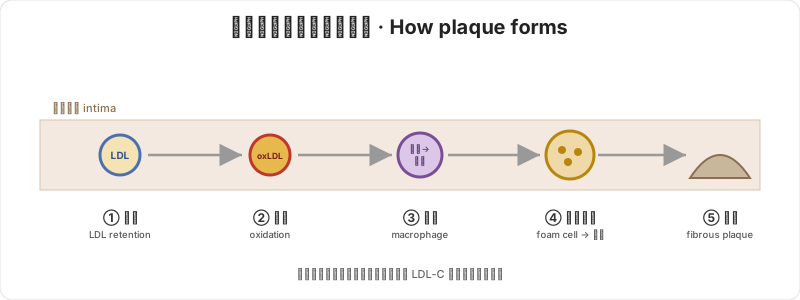
图 · 动脉粥样硬化的五步:LDL 滞留 → 氧化 → 巨噬细胞招募 → 泡沫细胞/脂纹 → 纤维斑块;这是一个持续数十年、可被干预的慢性过程。[2]Tier 1Mach, Francois et al. 2019 ESC/EAS guidelines for the management of dyslipidaemias: lipid modification to reduce cardiovascular risk. European Heart Journal 2020doi:10.1093/eurheartj/ehz455[3]Tier 1Bor\'en, Jan et al. Low-density lipoproteins cause atherosclerotic cardiovascular disease: pathophysiological, genetic, and therapeutic insights: a consensus statement from the European Atherosclerosis Society Consensus Panel. European Heart Journal 2020doi:10.1093/eurheartj/ehz962
一切从“滞留”开始
现代医学把动脉粥样硬化的起始事件归结为一件事:低密度脂蛋白(low-density lipoprotein,LDL低密度脂蛋白 · Low-density lipoproteinLDL/ˌloʊ ˈdɛnsɪti ˌlaɪpoʊˈproʊtiːn/运输胆固醇进入外周组织的脂蛋白颗粒;其携带的胆固醇称 LDL-C,是动脉粥样硬化的核心致病因素,俗称“坏胆固醇”。The lipoprotein particle that carries cholesterol to peripheral tissues; its cholesterol cargo (LDL-C) is a central causal driver of atherosclerosis, popularly called 'bad cholesterol'.🧩 词根拆解 / word rootslow-density低密度 · low density+lipo-脂、脂肪 · fat希腊语 lipos 脂肪+protein蛋白质 · protein希腊语 prōtos 第一/首要)以及其他富含胆固醇、携带载脂蛋白B(apolipoprotein B, apoB载脂蛋白B · Apolipoprotein BapoB/ˌæpoʊˌlaɪpoʊˈproʊtiːn biː/每个致动脉粥样硬化脂蛋白颗粒(LDL、VLDL、Lp(a)等)上各携带一个的结构蛋白;apoB 浓度反映致病颗粒总数,是比 LDL-C 更直接的风险指标。The structural protein present as exactly one copy per atherogenic lipoprotein particle (LDL, VLDL, Lp(a), etc.); apoB concentration reflects the total number of atherogenic particles and is a more direct risk marker than LDL-C.🧩 词根拆解 / word rootsapo-载(脱辅基蛋白)、来自/衍生 · the protein moiety; from/derived希腊语 apo 离开/由…而来+lipo-脂、脂肪 · fat希腊语 lipos 脂肪+protein蛋白质 · protein+BB 型(区分 apoA、apoE 等) · class B)的脂蛋白颗粒,在动脉壁内被**滞留(retention)**下来。2019 年 ESC/EAS 血脂异常管理指南明确指出,这种在动脉壁内的滞留是“动脉粥样硬化形成的关键起始事件”。[2]Tier 1Mach, Francois et al. 2019 ESC/EAS guidelines for the management of dyslipidaemias: lipid modification to reduce cardiovascular risk. European Heart Journal 2020doi:10.1093/eurheartj/ehz455
欧洲动脉粥样硬化学会(EAS)的共识声明进一步说明:在容易长斑块的部位,内膜下之所以会积聚 LDL, 主要是因为 LDL 被选择性地滞留在内膜里,而不仅仅是被动地渗入。[3]Tier 1Bor\'en, Jan et al. Low-density lipoproteins cause atherosclerotic cardiovascular disease: pathophysiological, genetic, and therapeutic insights: a consensus statement from the European Atherosclerosis Society Consensus Panel. European Heart Journal 2020doi:10.1093/eurheartj/ehz962 换句话说, 血里的致病脂蛋白颗粒越多、暴露时间越久,被“卡”在动脉壁里的机会就越大。
被“氧化”的 LDL 点燃炎症
被滞留在内膜里的 LDL 并不会安静地待着。它容易被氧化,生成氧化型低密度脂蛋白 (oxidized LDL,oxLDL氧化型低密度脂蛋白 · Oxidized LDLoxLDL/ˈɒksɪdaɪzd ˌɛl diː ˈɛl/被滞留在动脉内膜里的 LDL 颗粒经氧化修饰后形成的产物;它会激活内皮、招募炎症细胞,是引发动脉粥样硬化炎症反应的关键“点火”物质。The product formed when LDL particles retained in the arterial intima undergo oxidative modification; it activates the endothelium and recruits inflammatory cells, acting as a key trigger of the atherosclerotic inflammatory response.🧩 词根拆解 / word rootsoxidized被氧化的 · oxidized+LDL低密度脂蛋白 · low-density lipoprotein)。[3]Tier 1Bor\'en, Jan et al. Low-density lipoproteins cause atherosclerotic cardiovascular disease: pathophysiological, genetic, and therapeutic insights: a consensus statement from the European Atherosclerosis Society Consensus Panel. European Heart Journal 2020doi:10.1093/eurheartj/ehz962 氧化型 LDL 会启动一场 “无菌性炎症”:它激活内皮细胞,使其表面出现黏附分子并释放趋化因子,把血液里的单核细胞 (monocyte,一种白细胞)招募到动脉壁内。[3]Tier 1Bor\'en, Jan et al. Low-density lipoproteins cause atherosclerotic cardiovascular disease: pathophysiological, genetic, and therapeutic insights: a consensus statement from the European Atherosclerosis Society Consensus Panel. European Heart Journal 2020doi:10.1093/eurheartj/ehz962
这一步很关键:动脉粥样硬化在本质上是一种慢性炎症过程,而不是脂肪单纯“堵”在管子里那么 简单。[4]Tier 3StatPearls Publishing et al. Atherosclerosis. 2023https://www.ncbi.nlm.nih.gov/books/NBK507799/
巨噬细胞、泡沫细胞与脂纹
进入内膜的单核细胞会分化成巨噬细胞(macrophage,Macrophage巨噬细胞 · Macrophage/ˈmækroʊfeɪdʒ/一种大型免疫细胞,由血液中的单核细胞分化而来,负责吞噬、清除病原体、死亡细胞与脂质等“垃圾”;在动脉粥样硬化中,它吞入大量氧化型 LDL 后会变成泡沫细胞。A large immune cell derived from blood monocytes that engulfs and clears pathogens, dead cells, and debris such as lipids; in atherosclerosis, after taking up large amounts of oxidized LDL it turns into a foam cell.🧩 词根拆解 / word rootsmacro-大 · large希腊语 makros 大+-phage吞食者、吞噬 · eater/one that devours希腊语 phagein 吃)。[3]Tier 1Bor\'en, Jan et al. Low-density lipoproteins cause atherosclerotic cardiovascular disease: pathophysiological, genetic, and therapeutic insights: a consensus statement from the European Atherosclerosis Society Consensus Panel. European Heart Journal 2020doi:10.1093/eurheartj/ehz962 巨噬细胞本是免疫系统的“清道夫”,本意是清除这些被修饰的脂质;但它们通过特定的清道夫受体 大量吞入氧化型 LDL 后,胞内塞满了胆固醇脂滴,在显微镜下呈现出泡沫状外观——于是变成了 泡沫细胞(foam cell,Foam cell泡沫细胞 · Foam cell/foʊm sɛl/巨噬细胞通过清道夫受体大量吞入氧化型 LDL、胞内充满胆固醇脂滴后形成的细胞,在显微镜下呈泡沫状外观;泡沫细胞聚集是脂纹的核心特征。A cell formed when a macrophage takes up large amounts of oxidized LDL via scavenger receptors and becomes engorged with cholesterol-laden lipid droplets, giving it a foamy microscopic appearance; the aggregation of foam cells is the defining feature of the fatty streak.🧩 词根拆解 / word rootsfoam泡沫(形容胞内脂滴使细胞呈泡沫状) · foam (the foamy look from lipid droplets)+cell细胞 · cell)。[3]Tier 1Bor\'en, Jan et al. Low-density lipoproteins cause atherosclerotic cardiovascular disease: pathophysiological, genetic, and therapeutic insights: a consensus statement from the European Atherosclerosis Society Consensus Panel. European Heart Journal 2020doi:10.1093/eurheartj/ehz962
大量泡沫细胞聚集在一起,就形成了动脉壁上最早、肉眼可见的病变——脂纹(fatty streak,Fatty streak脂纹 · Fatty streak/ˈfæti striːk/动脉壁上最早、肉眼可见的动脉粥样硬化病变,由内膜里聚集的泡沫细胞构成;脂纹早在儿童期就可出现,是斑块的“雏形”,可进一步进展为纤维斑块。The earliest visible atherosclerotic lesion in the arterial wall, made up of foam cells that accumulate in the intima; fatty streaks can appear as early as childhood and are the precursor lesion that can progress into a fibrous plaque.🧩 词根拆解 / word rootsfatty含脂的、脂肪的 · fatty/lipid-laden+streak条纹、纹路(病变在血管内呈条纹状) · streak (the lesion appears as a streak))。[4]Tier 3StatPearls Publishing et al. Atherosclerosis. 2023https://www.ncbi.nlm.nih.gov/books/NBK507799/ 脂纹是泡沫细胞 在内膜里堆积的结果,是斑块的“雏形”。
从脂纹到斑块
脂纹并不等于终点。在泡沫细胞形成之后,中膜里的平滑肌细胞会向内膜迁移,并合成胶原,逐步把 柔软的脂纹改造成富含胶原的纤维斑块,覆盖在内皮下方。[4]Tier 3StatPearls Publishing et al. Atherosclerosis. 2023https://www.ncbi.nlm.nih.gov/books/NBK507799/ 就这样,早期的脂纹一步步进展为纤维斑块,再到更复杂的动脉粥样硬化病变。[4]Tier 3StatPearls Publishing et al. Atherosclerosis. 2023https://www.ncbi.nlm.nih.gov/books/NBK507799/ 这也解释了动脉粥样硬化这个词的字面含义:既有柔软的“粥样”脂质核心,又有“硬化”的纤维成分。
一个长达数十年、但可以干预的过程
这条“滞留—氧化—炎症—泡沫细胞—脂纹—斑块”的链条不是一夜之间完成的。动脉粥样硬化性心血管疾病 (atherosclerotic cardiovascular disease,ASCVD动脉粥样硬化性心血管疾病 · Atherosclerotic cardiovascular diseaseASCVD/ˌæθəroʊskləˈrɒtɪk ˌkɑːrdioʊˈvæskjələr/由动脉粥样硬化引起的一类疾病的总称,包括冠心病、缺血性卒中、外周动脉疾病等。An umbrella term for diseases caused by atherosclerosis, including coronary heart disease, ischaemic stroke, and peripheral artery disease.)起病很早,早期的脂纹病变 甚至在儿童期就已开始。[3]Tier 1Bor\'en, Jan et al. Low-density lipoproteins cause atherosclerotic cardiovascular disease: pathophysiological, genetic, and therapeutic insights: a consensus statement from the European Atherosclerosis Society Consensus Panel. European Heart Journal 2020doi:10.1093/eurheartj/ehz962 NHLBI 也指出,斑块往往在童年时期就开始形成, 并随年龄增长而加重。[1]Tier 3National Heart, Lung, et al. Atherosclerosis --- What Is Atherosclerosis?. 2024https://www.nhlbi.nih.gov/health/atherosclerosis
正因为它是一个长期累积的过程,干预才有意义。2019 ESC/EAS 指南强调,升高的 LDL 胆固醇与 ASCVD 之间是因果关系,而尽可能地降低 LDL 及其他含 apoB 的脂蛋白颗粒,能够减少心血管 事件。[2]Tier 1Mach, Francois et al. 2019 ESC/EAS guidelines for the management of dyslipidaemias: lipid modification to reduce cardiovascular risk. European Heart Journal 2020doi:10.1093/eurheartj/ehz455 而且这种关系是剂量依赖的:达到的 LDL-C 越低,未来心血管事件的 风险越低。[2]Tier 1Mach, Francois et al. 2019 ESC/EAS guidelines for the management of dyslipidaemias: lipid modification to reduce cardiovascular risk. European Heart Journal 2020doi:10.1093/eurheartj/ehz455
从更贴近生活的角度看,NHLBI 指出:大多数人可以通过践行有益心脏健康的生活方式来预防或延缓 动脉粥样硬化的发生;在某些情况下,通过健康的生活方式改变和药物,动脉粥样硬化甚至有可能被 逆转。[1]Tier 3National Heart, Lung, et al. Atherosclerosis --- What Is Atherosclerosis?. 2024https://www.nhlbi.nih.gov/health/atherosclerosis 这也是为什么“越早、越持续地把致病脂蛋白控制下来”如此 重要——你干预的,正是这条要走几十年的链条。
⚕️ 本内容仅供健康科普与学习,不能替代专业医疗建议、诊断或治疗。
参考文献 / References
- Tier 3National Heart, Lung, et al. Atherosclerosis --- What Is Atherosclerosis? (2024) · link
- Tier 1Mach, Francois et al. 2019 ESC/EAS guidelines for the management of dyslipidaemias: lipid modification to reduce cardiovascular risk. European Heart Journal (2020) · doi:10.1093/eurheartj/ehz455
- Tier 1Bor\'en, Jan et al. Low-density lipoproteins cause atherosclerotic cardiovascular disease: pathophysiological, genetic, and therapeutic insights: a consensus statement from the European Atherosclerosis Society Consensus Panel. European Heart Journal (2020) · doi:10.1093/eurheartj/ehz962
- Tier 3StatPearls Publishing et al. Atherosclerosis (2023) · link