冠心病、心绞痛与心肌梗死
先把三个词理顺
“冠心病”“心绞痛”“心梗”在生活里常被混着说,但它们其实指的是不同层次的东西:一个是疾病,一个是症状,一个是急性事件。理清它们,才能在关键时刻做出正确判断。
冠心病(coronary heart disease,CHD冠心病 · Coronary heart diseaseCHD/ˈkɔːrənəri hɑːrt dɪˈziːz/冠状动脉粥样硬化导致心肌供血不足所引起的心脏病,可表现为心绞痛、心肌梗死等。Heart disease resulting from insufficient blood supply to the myocardium due to atherosclerosis of the coronary arteries; may present as angina or myocardial infarction.🧩 词根拆解 / word rootscoron-冠、王冠(冠状动脉像王冠一样环绕心脏) · crown (the arteries encircle the heart like a crown)拉丁语 corona 王冠+-ary…的(形容词后缀) · adjective suffix,缩写 CHD)是病——为心脏自身供血的冠状动脉(coronary artery,Coronary artery冠状动脉 · Coronary artery/ˈkɔːrənəri ˈɑːrtəri/从主动脉根部发出、环绕并深入心脏、专门为心肌自身供应含氧血液的动脉;一旦被斑块阻塞,就可能引发冠心病或心肌梗死。An artery arising from the root of the aorta that encircles and penetrates the heart to supply oxygen-rich blood to the heart muscle itself; blockage can cause coronary heart disease or heart attack.🧩 词根拆解 / word rootscoron-冠、王冠(冠状动脉像王冠一样环绕心脏) · crown (the arteries encircle the heart like a crown)拉丁语 corona 王冠+-ary…的(形容词后缀) · adjective suffix+artery动脉 · artery希腊语 artēria)因动脉粥样硬化(atherosclerosis,Atherosclerosis动脉粥样硬化 · Atherosclerosis/ˌæθəroʊskləˈroʊsɪs/含胆固醇的脂质与炎症细胞在动脉内膜沉积、逐渐形成斑块使管腔狭窄、血管壁变硬的慢性过程。A chronic process in which cholesterol-rich lipids and inflammatory cells accumulate in the arterial intima, gradually forming plaques that narrow the lumen and stiffen the vessel wall.🧩 词根拆解 / word rootsathero-粥样、脂糊状(指斑块柔软的脂质核) · gruel/porridge (the soft fatty core)希腊语 athērē 粥/糊+scler(o)-硬化、变硬 · hardening希腊语 sklēros 硬+-osis(病理性)状态、过程 · abnormal condition/process希腊语 -ōsis)而变窄,导致心肌(myocardium,Myocardium心肌 · Myocardium/ˌmaɪəˈkɑːrdiəm/心壁中间厚厚的肌肉层,通过收缩和舒张把血液泵出心脏;它像身体其他肌肉一样,需要持续的含氧血液供应才能工作。The thick muscular middle layer of the heart wall that contracts and relaxes to pump blood out of the heart; like any muscle it needs a constant supply of oxygen-rich blood.🧩 词根拆解 / word rootsmyo-肌肉 · muscle希腊语 mys 肌肉+cardi-心 · heart希腊语 kardia 心+-um(解剖结构名词后缀) · noun suffix (anatomical structure))供血不足。[1]Tier 3American Heart Association et al. About Heart Attacks --- Heart Attack Symptoms, Risk, and Recovery. 2024https://www.heart.org/en/health-topics/heart-attack/about-heart-attacks 它属于动脉粥样硬化性心血管疾病(atherosclerotic cardiovascular disease,ASCVD动脉粥样硬化性心血管疾病 · Atherosclerotic cardiovascular diseaseASCVD/ˌæθəroʊskləˈrɒtɪk ˌkɑːrdioʊˈvæskjələr/由动脉粥样硬化引起的一类疾病的总称,包括冠心病、缺血性卒中、外周动脉疾病等。An umbrella term for diseases caused by atherosclerosis, including coronary heart disease, ischaemic stroke, and peripheral artery disease.)的一种。
缺血:一切的核心
当冠状动脉因斑块变窄,流向心肌的血液(以及其中的氧气)就可能不够用——这种“供血/供氧不足”的状态叫缺血(ischemia,Ischemia (ischaemia)缺血 · Ischemia (ischaemia)/ɪsˈkiːmiə/组织的血液供应(以及随之而来的供氧)不足以满足其代谢需要的状态;在心脏,即流向心肌的血流不足。它是心绞痛与心肌梗死背后的共同机制。A state in which the blood supply to a tissue—and thus its oxygen delivery—is insufficient for its metabolic needs; in the heart, insufficient blood flow to the myocardium. It is the common mechanism underlying angina and myocardial infarction.🧩 词根拆解 / word rootsisch-阻滞、抑制(血流被“拦住”) · restraining/holding back希腊语 ischein 抑制/拦住+-(a)emia血、血液(的状态) · blood (condition of)希腊语 haima 血)。心绞痛正是心肌在缺血时发出的“求救信号”:心肌得不到足够的含氧血液。[2]Tier 3American Heart Association et al. Angina (Chest Pain). 2024https://www.heart.org/en/health-topics/heart-attack/angina-chest-pain
可以打个比方:冠状动脉像给心肌供水的水管,斑块像水管里逐渐结的水垢。 平时水量勉强够用;一旦需求上升(如爬楼、情绪激动),变窄的“水管”就送不上足够的血,心肌“喊渴”,于是出现胸痛。
心绞痛(angina):是症状,不是病
心绞痛(angina,Angina (angina pectoris)心绞痛 · Angina (angina pectoris)/ænˈdʒaɪnə/因心肌得不到足够的含氧血液(缺血)而产生的胸部压迫、紧缩或疼痛感,可放射到肩、臂、颈、下颌、上腹或背部。它是一种症状(通常提示冠心病),而非一种独立疾病;分稳定型与不稳定型。Chest pressure, tightness, or pain caused by the heart muscle not getting enough oxygen-rich blood (ischemia), which may radiate to the shoulder, arm, neck, jaw, upper abdomen, or back. It is a symptom (usually of coronary heart disease), not a disease in itself; classified as stable or unstable.🧩 词根拆解 / word rootsangina绞窄、勒紧感(源于“扼喉”之意) · a choking/strangling sensation拉丁语 angere 扼、勒+pectoris胸的(“angina pectoris”即“胸部绞痛”) · of the chest拉丁语 pectus 胸)是一种症状,不是一种独立的疾病——它是心脏出问题(通常就是冠心病)的信号。[2]Tier 3American Heart Association et al. Angina (Chest Pain). 2024https://www.heart.org/en/health-topics/heart-attack/angina-chest-pain 典型表现是胸部的压迫、紧缩或疼痛感,可能放射到肩、臂、颈、下颌、上腹或背部。[2]Tier 3American Heart Association et al. Angina (Chest Pain). 2024https://www.heart.org/en/health-topics/heart-attack/angina-chest-pain[3]Tier 1Gulati, Martha et al. 2021 AHA/ACC/ASE/CHEST/SAEM/SCCT/SCMR guideline for the evaluation and diagnosis of chest pain: a report of the American College of Cardiology/American Heart Association Joint Committee on Clinical Practice Guidelines. Circulation 2021doi:10.1161/CIR.0000000000001029
医生会重点判断心绞痛是稳定型还是不稳定型。[2]Tier 3American Heart Association et al. Angina (Chest Pain). 2024https://www.heart.org/en/health-topics/heart-attack/angina-chest-pain 稳定型心绞痛较可预测(例如总在类似的用力程度下出现、休息后缓解);而如果是不稳定型,可能需要紧急救治,以设法防止发展成心肌梗死。[2]Tier 3American Heart Association et al. Angina (Chest Pain). 2024https://www.heart.org/en/health-topics/heart-attack/angina-chest-pain 换句话说,不稳定型心绞痛是一记红色警报。
心肌梗死(MI / heart attack):血流被切断,心肌开始坏死
心肌梗死(myocardial infarction,MI心肌梗死 · Myocardial infarctionMI/ˌmaɪəˈkɑːrdiəl ɪnˈfɑːrkʃən/俗称“心脏病发作”(heart attack):流向一部分心肌的血流被减少或阻断(多因斑块破裂后形成血栓突然堵塞冠状动脉),若持续过久,该部分心肌因缺血缺氧而坏死。是分秒必争的急症。Commonly called a 'heart attack': blood flow to part of the heart muscle is reduced or blocked (usually when a ruptured plaque triggers a clot that suddenly occludes a coronary artery), and if this lasts too long that muscle dies from lack of oxygen. A time-critical emergency.🧩 词根拆解 / word rootsmyo-肌肉 · muscle希腊语 mys 肌肉+cardi-心 · heart希腊语 kardia 心+-al…的(形容词后缀) · adjective suffix+infarct-梗死(因供血受阻而形成的一片坏死组织) · a plug of dead tissue from an obstructed blood supply拉丁语 infarcire 塞入、填塞+-ion…的过程/结果(名词后缀) · process/result (noun suffix),缩写 MI,俗称 heart attack)发生在流向心肌的血流被减少或阻断的时候:冠状动脉被斑块(脂质、胆固醇等堆积形成)严重堵塞,若血流被中断得太久,得不到含氧血的那部分心肌就会开始坏死。[1]Tier 3American Heart Association et al. About Heart Attacks --- Heart Attack Symptoms, Risk, and Recovery. 2024https://www.heart.org/en/health-topics/heart-attack/about-heart-attacks
它与你在上一课学过的“斑块破裂与血栓”直接相连:多数心梗是原本狭窄的斑块破裂、随即在破口处形成血栓(血凝块)、突然把血管堵死所致。[1]Tier 3American Heart Association et al. About Heart Attacks --- Heart Attack Symptoms, Risk, and Recovery. 2024https://www.heart.org/en/health-topics/heart-attack/about-heart-attacks 这也是为什么心梗常常“说来就来”。
关键在于时间:血流中断得越久,坏死的心肌越多。因此心梗是分秒必争的急症——快速行动可以挽救生命。[4]Tier 3American Heart Association et al. Warning Signs of a Heart Attack. 2024https://www.heart.org/en/health-topics/heart-attack/warning-signs-of-a-heart-attack
稳定的一端 vs 急性的一端
把冠心病想成一条谱系会更清楚:
- 慢性、稳定的一端:慢性冠脉疾病(chronic coronary disease,缩写 CCD)——涵盖阻塞性或非阻塞性冠脉病变、既往心梗或血运重建后的稳定状态,以及慢性心绞痛综合征等。[5]Tier 1Virani, Salim S. et al. 2023 AHA/ACC/ACCP/ASPC/NLA/PCNA guideline for the management of patients with chronic coronary disease: a report of the American Heart Association/American College of Cardiology Joint Committee on Clinical Practice Guidelines. Circulation 2023doi:10.1161/CIR.0000000000001168 这一端相对可控、可预测。
- 急性的一端:急性冠脉综合征(acute coronary syndrome,ACS急性冠脉综合征 · Acute coronary syndromeACS/əˈkjuːt ˈkɔːrənəri ˈsɪndroʊm/冠状动脉内急性血栓性闭塞引起的一组急性临床表现的总称,包括 ST 段抬高型心肌梗死(STEMI)、非 ST 段抬高型心肌梗死(NSTEMI)和不稳定型心绞痛。An umbrella term for the acute clinical presentations caused by acute thrombotic occlusion of a coronary artery, including ST-elevation myocardial infarction (STEMI), non-ST-elevation myocardial infarction (NSTEMI) and unstable angina.🧩 词根拆解 / word rootsacute急性的、突然的 · sharp/sudden拉丁语 acutus 尖锐的+coron-冠、王冠(冠状动脉) · crown (the coronary arteries)拉丁语 corona 王冠+syndrome综合征(同时出现的一组表现) · a set of features running together希腊语 syn- 一起 + dromos 奔跑,缩写 ACS)——由冠脉血流突然明显减少引起的一组急症,从不稳定型心绞痛到心肌梗死。胸痛是 ACS 男女患者最常见的症状。[3]Tier 1Gulati, Martha et al. 2021 AHA/ACC/ASE/CHEST/SAEM/SCCT/SCMR guideline for the evaluation and diagnosis of chest pain: a report of the American College of Cardiology/American Heart Association Joint Committee on Clinical Practice Guidelines. Circulation 2021doi:10.1161/CIR.0000000000001029 这一端是急诊、要命的。
简单记:稳定 = 门诊慢慢管;急性 = 立刻打急救电话。
警示症状:出现这些,别硬扛
美国心脏协会(AHA)列出的心脏病发作警示症状包括:[4]Tier 3American Heart Association et al. Warning Signs of a Heart Attack. 2024https://www.heart.org/en/health-topics/heart-attack/warning-signs-of-a-heart-attack
- 胸部不适:胸部中央出现不舒服的压迫感、紧缩感、饱胀感或疼痛,可能持续,也可能反复出现。[4]Tier 3American Heart Association et al. Warning Signs of a Heart Attack. 2024https://www.heart.org/en/health-topics/heart-attack/warning-signs-of-a-heart-attack
- 上半身不适:一侧或双侧手臂、背部、颈部、下颌或胃部(上腹部)的疼痛或不适。[4]Tier 3American Heart Association et al. Warning Signs of a Heart Attack. 2024https://www.heart.org/en/health-topics/heart-attack/warning-signs-of-a-heart-attack[3]Tier 1Gulati, Martha et al. 2021 AHA/ACC/ASE/CHEST/SAEM/SCCT/SCMR guideline for the evaluation and diagnosis of chest pain: a report of the American College of Cardiology/American Heart Association Joint Committee on Clinical Practice Guidelines. Circulation 2021doi:10.1161/CIR.0000000000001029
- 气短:可以伴随胸部不适,也可以单独出现。[4]Tier 3American Heart Association et al. Warning Signs of a Heart Attack. 2024https://www.heart.org/en/health-topics/heart-attack/warning-signs-of-a-heart-attack
- 其他信号:冒冷汗、恶心、头晕(眩晕)、异常疲惫,以及心跳不规律。[4]Tier 3American Heart Association et al. Warning Signs of a Heart Attack. 2024https://www.heart.org/en/health-topics/heart-attack/warning-signs-of-a-heart-attack
需要特别提醒:女性可能出现胸痛,但也更容易出现一些**不那么“典型”**的症状,如气短、恶心、呕吐、后背/肩/手臂疼痛以及异常乏力。[4]Tier 3American Heart Association et al. Warning Signs of a Heart Attack. 2024https://www.heart.org/en/health-topics/heart-attack/warning-signs-of-a-heart-attack 正因如此,容易被误当成“胃不舒服”或“累着了”而延误。
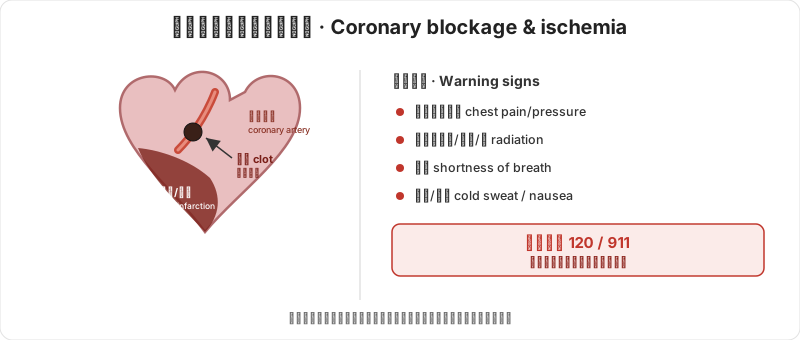
图 · 斑块破裂处形成血栓、突然堵死冠状动脉,下游心肌因缺血而坏死;出现胸痛或压迫感、放射至手臂/下颌/背、气短、冷汗/恶心等警示症状时,应立即拨打 120 / 911。[4]Tier 3American Heart Association et al. Warning Signs of a Heart Attack. 2024https://www.heart.org/en/health-topics/heart-attack/warning-signs-of-a-heart-attack
何时必须立即拨打急救电话
出现上述警示症状时,不要等待、不要自我说服“忍一忍就过去”。请立即拨打当地急救电话:中国为 120、美国为 911。[4]Tier 3American Heart Association et al. Warning Signs of a Heart Attack. 2024https://www.heart.org/en/health-topics/heart-attack/warning-signs-of-a-heart-attack[6]Tier 3Beijing United Family Hospital et al. How to Call an Ambulance in Beijing. 2024https://beijing.ufh.com.cn/7397/health-information/articles/how-to-call-an-ambulance-in-beijing?lang=en 指南明确建议,对急性胸痛应尽快评估,并教育公众拨打 911(在中国即 120)呼叫急救医疗服务、由救护车送往最近的急诊。[3]Tier 1Gulati, Martha et al. 2021 AHA/ACC/ASE/CHEST/SAEM/SCCT/SCMR guideline for the evaluation and diagnosis of chest pain: a report of the American College of Cardiology/American Heart Association Joint Committee on Clinical Practice Guidelines. Circulation 2021doi:10.1161/CIR.0000000000001029
为什么优先叫救护车、而不是自己开车去医院?因为拨打急救电话通常是获得救命治疗最快的方式——急救人员到场后即可开始救治,也能更快把你送到医院。[4]Tier 3American Heart Association et al. Warning Signs of a Heart Attack. 2024https://www.heart.org/en/health-topics/heart-attack/warning-signs-of-a-heart-attack 分秒必争,快速行动能挽救生命。[4]Tier 3American Heart Association et al. Warning Signs of a Heart Attack. 2024https://www.heart.org/en/health-topics/heart-attack/warning-signs-of-a-heart-attack
⚕️ 本内容仅供健康科普与学习,不能替代专业医疗建议、诊断或治疗。紧急情况请立即拨打急救电话。
参考文献 / References
- Tier 3American Heart Association et al. About Heart Attacks --- Heart Attack Symptoms, Risk, and Recovery (2024) · link
- Tier 3American Heart Association et al. Angina (Chest Pain) (2024) · link
- Tier 1Gulati, Martha et al. 2021 AHA/ACC/ASE/CHEST/SAEM/SCCT/SCMR guideline for the evaluation and diagnosis of chest pain: a report of the American College of Cardiology/American Heart Association Joint Committee on Clinical Practice Guidelines. Circulation (2021) · doi:10.1161/CIR.0000000000001029
- Tier 3American Heart Association et al. Warning Signs of a Heart Attack (2024) · link
- Tier 1Virani, Salim S. et al. 2023 AHA/ACC/ACCP/ASPC/NLA/PCNA guideline for the management of patients with chronic coronary disease: a report of the American Heart Association/American College of Cardiology Joint Committee on Clinical Practice Guidelines. Circulation (2023) · doi:10.1161/CIR.0000000000001168
- Tier 3Beijing United Family Hospital et al. How to Call an Ambulance in Beijing (2024) · link