医生如何评估你的心血管风险
为什么医生要先“算风险”,而不是只看一个数
面对动脉粥样硬化性心血管疾病(atherosclerotic cardiovascular disease,ASCVD动脉粥样硬化性心血管疾病 · Atherosclerotic cardiovascular diseaseASCVD/ˌæθəroʊskləˈrɒtɪk ˌkɑːrdioʊˈvæskjələr/由动脉粥样硬化引起的一类疾病的总称,包括冠心病、缺血性卒中、外周动脉疾病等。An umbrella term for diseases caused by atherosclerosis, including coronary heart disease, ischaemic stroke, and peripheral artery disease.)—— 也就是由动脉粥样硬化(atherosclerosis,Atherosclerosis动脉粥样硬化 · Atherosclerosis/ˌæθəroʊskləˈroʊsɪs/含胆固醇的脂质与炎症细胞在动脉内膜沉积、逐渐形成斑块使管腔狭窄、血管壁变硬的慢性过程。A chronic process in which cholesterol-rich lipids and inflammatory cells accumulate in the arterial intima, gradually forming plaques that narrow the lumen and stiffen the vessel wall.🧩 词根拆解 / word rootsathero-粥样、脂糊状(指斑块柔软的脂质核) · gruel/porridge (the soft fatty core)希腊语 athērē 粥/糊+scler(o)-硬化、变硬 · hardening希腊语 sklēros 硬+-osis(病理性)状态、过程 · abnormal condition/process希腊语 -ōsis)引起的一类疾病——医生并不会 对每个人采取一样强度的干预。指南的核心逻辑是:一个人接受预防的力度应当与他的总体心血管风险相匹配, 风险越高,干预就应越积极。[1]Tier 1Mach, Francois et al. 2019 ESC/EAS guidelines for the management of dyslipidaemias: lipid modification to reduce cardiovascular risk. European Heart Journal 2020doi:10.1093/eurheartj/ehz455
这就是为什么,医生往往不是单看你某一个化验数字(比如一个 LDL 值),而是先把你的年龄、性别、血压、 吸烟、血脂等信息综合起来,估算一个整体风险,再决定下一步。
什么是“风险分层”
把人群按估算出的总体风险高低分成几个等级,就叫风险分层(risk stratification,Risk stratification风险分层 · Risk stratification/rɪsk ˌstrætɪfɪˈkeɪʃən/把人群按估算出的总体心血管风险高低分成若干等级(如低危、中危、高危、极高危)的过程;不同层级对应不同的管理目标与干预强度。The process of sorting people into levels according to their estimated total cardiovascular risk (e.g. low, moderate, high, very-high); each level guides different management goals and treatment intensity.🧩 词根拆解 / word rootsrisk风险 · risk+strat-层、分层 · layer拉丁语 stratum 铺层+-ification使成为…的过程 · process of making into拉丁语 -ificatio)。 欧洲指南(ESC/EAS)把总体心血管风险分为极高危、高危、中危、低危四个层级。[1]Tier 1Mach, Francois et al. 2019 ESC/EAS guidelines for the management of dyslipidaemias: lipid modification to reduce cardiovascular risk. European Heart Journal 2020doi:10.1093/eurheartj/ehz455 《中国血脂管理指南(2023 年)》同样采用低危、中危、高危等分层,并在此基础上进一步细分出“超高危”“极高危” 等类别。[2]Tier 1Joint Committee for the Development of Chinese Guidelines for the Management of Blood Lipids et al. 2023 Chinese guideline for lipid management (English full text). Frontiers in Pharmacology 2023doi:10.3389/fphar.2023.1190934
分层的意义在于:不同层级对应不同的管理目标与随访强度。具体每一层对应的 LDL-C 目标值不在本课展开, 将在后续“血脂目标值”一章详细比较。
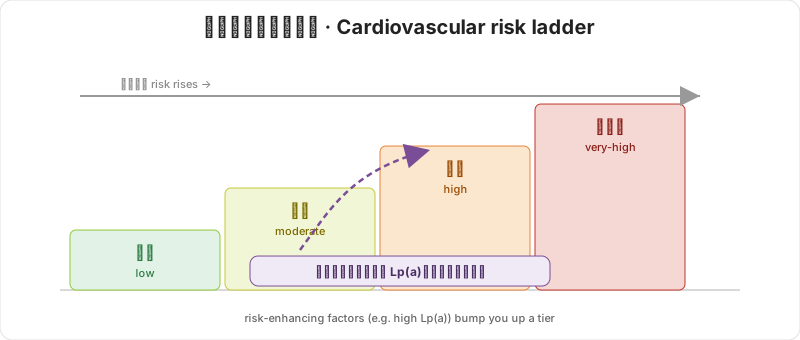
图 · 欧洲指南把总体心血管风险分为低危、中危、高危、极高危四层;风险增强因素(如高 Lp(a))可在基础评分之上把人上调一层。[1]Tier 1Mach, Francois et al. 2019 ESC/EAS guidelines for the management of dyslipidaemias: lipid modification to reduce cardiovascular risk. European Heart Journal 2020doi:10.1093/eurheartj/ehz455
常用的风险评估工具:估算“十年风险”
大多数评估工具估算的是十年风险(10-year risk,10-year risk十年风险 · 10-year risk/tɛn jɪər rɪsk/风险评估工具最常输出的指标:估算一个人在未来十年内发生某类心血管事件(如首次致死性动脉粥样硬化事件)的概率,用于风险分层。The metric most risk tools output: the estimated probability that a person will experience a given cardiovascular event (e.g. a first fatal atherosclerotic event) over the next ten years, used for risk stratification.🧩 词根拆解 / word roots10-year十年(的) · ten-year+risk风险 · risk),也就是未来十年内发生 某类心血管事件的概率。欧洲指南推荐使用 SCORE 系统,来估算一个人未来十年内首次发生致死性动脉粥样 硬化事件的累积风险。[1]Tier 1Mach, Francois et al. 2019 ESC/EAS guidelines for the management of dyslipidaemias: lipid modification to reduce cardiovascular risk. European Heart Journal 2020doi:10.1093/eurheartj/ehz455 中国指南则建议使用基于中国人群长期队列建立的风险评估流程 (以及配套的数字化风险评估工具)来估算风险,因为不同人群的基线风险不同,直接套用外国模型并不合适。[2]Tier 1Joint Committee for the Development of Chinese Guidelines for the Management of Blood Lipids et al. 2023 Chinese guideline for lipid management (English full text). Frontiers in Pharmacology 2023doi:10.3389/fphar.2023.1190934
换句话说,风险评估工具就像一张“综合评分表”:把多个危险因素放在一起打分,输出一个可比较的概率。
有些人不用算,就已经是高危
并非所有人都需要用工具打分。欧洲指南指出,已经确诊 ASCVD、或患有 1 型/2 型糖尿病等情况的人, 通常本身就属于高危或极高危,无需再用评分系统评估。[1]Tier 1Mach, Francois et al. 2019 ESC/EAS guidelines for the management of dyslipidaemias: lipid modification to reduce cardiovascular risk. European Heart Journal 2020doi:10.1093/eurheartj/ehz455 对这些人,重点直接落在 积极管理上,而不是先纠结于算出一个百分比。
什么是“风险增强因素”
标准评分表并没有覆盖所有信息。有些额外指标会在基础评分之上,把一个人的风险向上调整, 这类指标被称为风险增强因素(risk-enhancing factor,Risk-enhancing factor风险增强因素 · Risk-enhancing factor/rɪsk ɪnˈhɑːnsɪŋ ˈfæktər/标准风险评分未充分覆盖、但会在基础评分之上把一个人的估算风险向上调整的额外指标(如脂蛋白(a)、载脂蛋白B 等);常用于把处于边缘或中危的人重新归入更高层级。An additional marker not fully captured by the standard risk score that, on top of the base estimate, pushes a person's estimated risk upward (e.g. lipoprotein(a), apolipoprotein B); often used to reclassify borderline or intermediate individuals into a higher category.🧩 词根拆解 / word rootsrisk风险 · risk+enhanc-增强、提高 · to increase/strengthen古法语 enhaucier 抬高+-ing…的(分词/形容词后缀) · participle/adjective suffix+factor因素 · factor拉丁语 factor 做事者)。 《中国血脂管理指南(2023 年)》列出了一份风险增强因素清单,用于把处于边缘或中危的人向更高层级调整, 其中就包括一些血清生物标志物。[2]Tier 1Joint Committee for the Development of Chinese Guidelines for the Management of Blood Lipids et al. 2023 Chinese guideline for lipid management (English full text). Frontiers in Pharmacology 2023doi:10.3389/fphar.2023.1190934 欧洲指南也提到,载脂蛋白B、脂蛋白(a)、甘油三酯 等因素有助于改善风险分类。[1]Tier 1Mach, Francois et al. 2019 ESC/EAS guidelines for the management of dyslipidaemias: lipid modification to reduce cardiovascular risk. European Heart Journal 2020doi:10.1093/eurheartj/ehz455
打个比方:基础评分像天气预报给出的“降雨概率”,而风险增强因素像预报里没算进去的额外线索(比如你家在低洼地带)—— 它会让你把带伞的决定往前调。
Lp(a) 如何上调你的分层
脂蛋白(a)(lipoprotein(a),Lp(a)脂蛋白(a) · Lipoprotein(a)Lp(a)/ˌlaɪpoʊˈproʊtiːn eɪ/一种低密度脂蛋白(LDL)样颗粒,额外通过二硫键连接一个 apolipoprotein(a) 蛋白;血浆水平主要由遗传决定,一生中相对稳定。An LDL-like particle that additionally carries one apolipoprotein(a) molecule bound by a disulfide bond; plasma level is largely genetically determined and stable through life.🧩 词根拆解 / word rootslipo-脂、脂肪 · fat希腊语 lipos 脂肪+protein蛋白质 · protein希腊语 prōtos 第一/首要+(a)载脂蛋白(a) 亚型标记 · the apo(a) variant由 LPA 基因编码,常缩写 Lp(a))正是一个典型的风险增强因素。 《中国血脂管理指南(2023 年)》把 Lp(a) ≥ 500 mg/L(即 ≥50 mg/dL)列为 ASCVD 的风险增强因素之一。[2]Tier 1Joint Committee for the Development of Chinese Guidelines for the Management of Blood Lipids et al. 2023 Chinese guideline for lipid management (English full text). Frontiers in Pharmacology 2023doi:10.3389/fphar.2023.1190934 欧洲指南进一步指出,极高的 Lp(a) 水平本身就足以让一个人被归入高危或极高危,而不必再依赖评分。[1]Tier 1Mach, Francois et al. 2019 ESC/EAS guidelines for the management of dyslipidaemias: lipid modification to reduce cardiovascular risk. European Heart Journal 2020doi:10.1093/eurheartj/ehz455
这背后的证据很硬:欧洲动脉粥样硬化学会(EAS)2022 年共识指出,把 Lp(a) 纳入总体风险评估可以改善风险分层, 尤其对 Lp(a) 极高的人;一个约 100 mg/dL(约 250 nmol/L)的 Lp(a) 水平,大致会使 ASCVD 风险翻倍, 且这一效应与基线绝对风险高低无关。[3]Tier 1Kronenberg, Florian et al. Lipoprotein(a) in atherosclerotic cardiovascular disease and aortic stenosis: a European Atherosclerosis Society consensus statement. European Heart Journal 2022doi:10.1093/eurheartj/ehac361 而极高的 Lp(a)(>180 mg/dL 或 >430 nmol/L) 所带来的终生 ASCVD 风险,相当于未经治疗的杂合子型家族性高胆固醇血症。[3]Tier 1Kronenberg, Florian et al. Lipoprotein(a) in atherosclerotic cardiovascular disease and aortic stenosis: a European Atherosclerosis Society consensus statement. European Heart Journal 2022doi:10.1093/eurheartj/ehac361
值得强调的是,这份风险是独立于低密度脂蛋白(low-density lipoprotein,LDL低密度脂蛋白 · Low-density lipoproteinLDL/ˌloʊ ˈdɛnsɪti ˌlaɪpoʊˈproʊtiːn/运输胆固醇进入外周组织的脂蛋白颗粒;其携带的胆固醇称 LDL-C,是动脉粥样硬化的核心致病因素,俗称“坏胆固醇”。The lipoprotein particle that carries cholesterol to peripheral tissues; its cholesterol cargo (LDL-C) is a central causal driver of atherosclerosis, popularly called 'bad cholesterol'.🧩 词根拆解 / word rootslow-density低密度 · low density+lipo-脂、脂肪 · fat希腊语 lipos 脂肪+protein蛋白质 · protein希腊语 prōtos 第一/首要)胆固醇的: 即使 LDL 胆固醇很低,升高的 Lp(a) 仍然是一个风险因素。[3]Tier 1Kronenberg, Florian et al. Lipoprotein(a) in atherosclerotic cardiovascular disease and aortic stenosis: a European Atherosclerosis Society consensus statement. European Heart Journal 2022doi:10.1093/eurheartj/ehac361 这正是为什么,一次 Lp(a) 检测可能会实实在在地改变医生对你的风险判断,进而影响后续管理力度。
小结:风险评估是一整套逻辑,不是单个数字
- 医生先估算你的总体心血管风险,风险越高、干预越积极。[1]Tier 1Mach, Francois et al. 2019 ESC/EAS guidelines for the management of dyslipidaemias: lipid modification to reduce cardiovascular risk. European Heart Journal 2020doi:10.1093/eurheartj/ehz455
- 通过风险分层把人分为低/中/高/极高危等层级。[1]Tier 1Mach, Francois et al. 2019 ESC/EAS guidelines for the management of dyslipidaemias: lipid modification to reduce cardiovascular risk. European Heart Journal 2020doi:10.1093/eurheartj/ehz455[2]Tier 1Joint Committee for the Development of Chinese Guidelines for the Management of Blood Lipids et al. 2023 Chinese guideline for lipid management (English full text). Frontiers in Pharmacology 2023doi:10.3389/fphar.2023.1190934
- 常用工具估算十年风险(如欧洲 SCORE、中国人群队列工具)。[1]Tier 1Mach, Francois et al. 2019 ESC/EAS guidelines for the management of dyslipidaemias: lipid modification to reduce cardiovascular risk. European Heart Journal 2020doi:10.1093/eurheartj/ehz455[2]Tier 1Joint Committee for the Development of Chinese Guidelines for the Management of Blood Lipids et al. 2023 Chinese guideline for lipid management (English full text). Frontiers in Pharmacology 2023doi:10.3389/fphar.2023.1190934
- 风险增强因素(如 Lp(a))会在基础评分之上把你的分层往上调。[2]Tier 1Joint Committee for the Development of Chinese Guidelines for the Management of Blood Lipids et al. 2023 Chinese guideline for lipid management (English full text). Frontiers in Pharmacology 2023doi:10.3389/fphar.2023.1190934[3]Tier 1Kronenberg, Florian et al. Lipoprotein(a) in atherosclerotic cardiovascular disease and aortic stenosis: a European Atherosclerosis Society consensus statement. European Heart Journal 2022doi:10.1093/eurheartj/ehac361
具体的风险百分比切点、以及每一层对应的 LDL-C 目标值,请以你所在地区指南与主治医生的判断为准, 并见后续“血脂目标值”一章。
⚕️ 本内容仅供健康科普与学习,不能替代专业医疗建议、诊断或治疗。
参考文献 / References
- Tier 1Mach, Francois et al. 2019 ESC/EAS guidelines for the management of dyslipidaemias: lipid modification to reduce cardiovascular risk. European Heart Journal (2020) · doi:10.1093/eurheartj/ehz455
- Tier 1Joint Committee for the Development of Chinese Guidelines for the Management of Blood Lipids et al. 2023 Chinese guideline for lipid management (English full text). Frontiers in Pharmacology (2023) · doi:10.3389/fphar.2023.1190934
- Tier 1Kronenberg, Florian et al. Lipoprotein(a) in atherosclerotic cardiovascular disease and aortic stenosis: a European Atherosclerosis Society consensus statement. European Heart Journal (2022) · doi:10.1093/eurheartj/ehac361