主动脉瓣狭窄与 Lp(a) 的关联
先认识主动脉瓣
主动脉瓣(aortic valve)是心脏四个瓣膜(heart valve,Heart valve心脏瓣膜 · Heart valve/hɑːrt vælv/心脏内像单向门一样的结构,共四个(三尖瓣、二尖瓣、肺动脉瓣、主动脉瓣),确保血液只朝一个方向流动、不倒流。One of the four one-way, door-like structures in the heart (tricuspid, mitral, pulmonary, aortic valve) that keep blood flowing in a single forward direction and prevent backflow.🧩 词根拆解 / word rootsvalve瓣、活门(原指门扇) · leaf of a folding door拉丁语 valva 门扇)之一, 位于左心室(left ventricle,Ventricle心室 · Ventricle/ˈvɛntrɪkəl/心脏下部的两个泵血腔室(左心室、右心室);右心室把血泵向肺,左心室把血泵向全身,是心脏主要的“动力泵”。Either of the two lower pumping chambers of the heart (left and right ventricle); the right ventricle pumps blood to the lungs and the left ventricle pumps blood to the whole body.🧩 词根拆解 / word rootsventr-腹、腔 · belly/cavity拉丁语 venter 腹+-icle小(指小词后缀) · diminutive: little)与主动脉(aorta,Aorta主动脉 · Aorta/eɪˈɔːrtə/人体最大的动脉,从左心室发出,是体循环的“主干”;它逐级分支成越来越小的动脉,把富氧血送往全身。The body's largest artery, arising from the left ventricle; it is the 'trunk' of the systemic circulation, branching into progressively smaller arteries that carry oxygen-rich blood throughout the body.🧩 词根拆解 / word rootsaort-主动脉 · aorta希腊语 aortē 悬挂之物(指大血管)+-a名词词尾 · noun ending) 之间。心脏每跳动一次,它就打开、让左心室把血射入主动脉,随即关闭、防止血液倒流。
主动脉瓣狭窄(aortic (valve) stenosis,AS主动脉瓣狭窄 · Aortic (valve) stenosisAS/eɪˈɔːrtɪk stəˈnoʊsɪs/主动脉瓣开口变窄、阻碍左心室向主动脉射血的瓣膜病;高 Lp(a) 是其独立危险因素之一。A valvular disease in which the aortic valve opening narrows, obstructing blood ejection from the left ventricle into the aorta; high Lp(a) is one independent risk factor.🧩 词根拆解 / word rootsaort-主动脉 · aorta希腊语 aortē+-ic…的(形容词后缀) · adjective suffix+steno-狭窄 · narrow希腊语 stenos 窄+-osis(病理性)状态、过程 · abnormal condition/process希腊语 -ōsis,常缩写 AS)指的 是这个瓣口变窄、阻碍左心室向主动脉射血——医学上称为"左心室流出道梗阻"。[1]Tier 3StatPearls Publishing et al. Aortic Stenosis. 2023https://www.ncbi.nlm.nih.gov/books/NBK557628/
瓣膜为什么会变窄:钙化
在中老年人群中,主动脉瓣狭窄最常见的原因是瓣膜随年龄发生钙化(calcification, Calcification钙化 · Calcification/ˌkælsɪfɪˈkeɪʃən/钙盐(主要为磷酸钙)在软组织中异常沉积、使其变硬的过程;当发生在心脏瓣膜或动脉壁时,会损害它们的正常功能。它是一种主动的、类似成骨的病变,而非单纯“缺钙/补钙”问题。The abnormal deposition of calcium salts (mainly calcium phosphate) in soft tissue, causing it to harden; when it occurs in heart valves or arterial walls it impairs their normal function. It is an active, bone-like process rather than a simple matter of dietary calcium.🧩 词根拆解 / word rootscalc-钙、石灰 · calcium/lime拉丁语 calx 石灰+-fication使…形成(的过程) · process of making into)——钙盐逐渐沉积在瓣叶里,使原本柔软的瓣膜变硬、增厚,这一过程称为 主动脉瓣钙化(aortic valve calcification,AVC主动脉瓣钙化 · Aortic valve calcificationAVC/eɪˈɔːrtɪk vælv ˌkælsɪfɪˈkeɪʃən/钙盐在主动脉瓣叶内逐渐沉积、使原本柔软的瓣膜变硬、增厚的病理过程;是中老年人主动脉瓣狭窄最常见的原因,也是高 Lp(a) 所促发的关键环节。The pathological deposition of calcium in the aortic valve leaflets that progressively stiffens and thickens the normally supple valve; the most common cause of aortic stenosis in older adults and a key process promoted by high Lp(a).🧩 词根拆解 / word rootsaort-主动脉 · aorta希腊语 aortē+valve瓣、活门 · valve拉丁语 valva 门扇+calc-钙、石灰 · calcium/lime拉丁语 calx 石灰+-fication使…形成(的过程) · process of making into)。 StatPearls 指出,这种钙化性主动脉瓣硬化在 65 岁以上人群中的患病率约为 29%,远高于 65 岁及以下 人群(约 1%–2%)。[1]Tier 3StatPearls Publishing et al. Aortic Stenosis. 2023https://www.ncbi.nlm.nih.gov/books/NBK557628/
要留意:这里的"钙化"是瓣膜本身的一种主动的、类似成骨的病变,而不是简单的"钙吃多了"或"缺钙 补钙"的问题。
狭窄如何拖累心脏:后负荷与左心室肥厚
瓣口一旦变窄,左心室每次射血都必须对着一个"半开的门"更用力地泵——也就是它要克服的阻力(后负荷, afterload,Afterload后负荷 · Afterload/ˈæftərloʊd/心室在收缩、射血时必须克服的阻力或压力负荷;主动脉瓣狭窄会显著增加左心室的后负荷,迫使心肌更用力地泵血。The resistance or pressure load the ventricle must overcome to eject blood during contraction; aortic stenosis markedly increases the left ventricle's afterload, forcing the heart muscle to pump harder.🧩 词根拆解 / word rootsafter-之后(射血过程之后遇到的负荷) · after (the load met during ejection)+load负荷、负担 · load/burden)增加了。研究显示,主动脉瓣狭窄会升高左心室的收缩压负荷。
[1]Tier 3StatPearls Publishing et al. Aortic Stenosis. 2023https://www.ncbi.nlm.nih.gov/books/NBK557628/为了应对这种长期的高压力负荷,左心室的心肌(myocardium)会代偿性地增厚,即左心室肥厚 (left ventricular hypertrophy,LVH左心室肥厚 · Left ventricular hypertrophyLVH/lɛft vɛnˈtrɪkjələr haɪˈpɜːrtrəfi/左心室心肌因长期承受过高的压力负荷(如主动脉瓣狭窄或高血压)而代偿性增厚、心室质量增大的改变;早期能维持泵血,长期却会导致心室功能下降甚至心力衰竭。A compensatory thickening and increase in mass of the left ventricular muscle in response to a chronically elevated pressure load (as in aortic stenosis or hypertension); it maintains pumping early on but over time can lead to ventricular dysfunction and heart failure.🧩 词根拆解 / word rootsleft ventricular左心室的 · of the left ventricle+hyper-过度、超过 · over/excessive希腊语 hyper 超过+-trophy(组织的)生长、营养状态 · growth/nourishment希腊语 trophē 营养,缩写 LVH); 左心室质量随之增加。[1]Tier 3StatPearls Publishing et al. Aortic Stenosis. 2023https://www.ncbi.nlm.nih.gov/books/NBK557628/ 这种代偿早期能维持泵血,但持续下去最终 会导致左心室功能下降乃至衰竭。[1]Tier 3StatPearls Publishing et al. Aortic Stenosis. 2023https://www.ncbi.nlm.nih.gov/books/NBK557628/
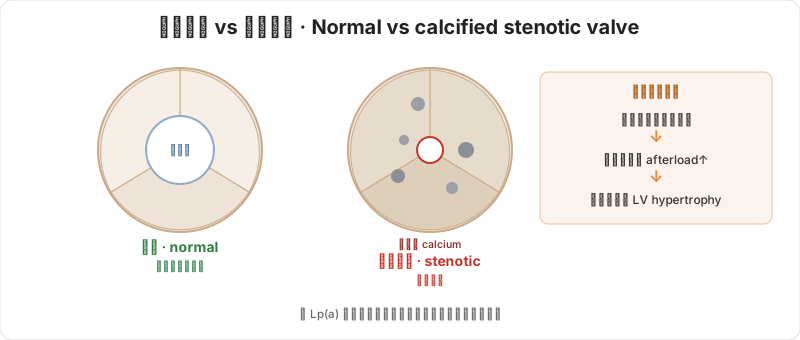
图 · 正常主动脉瓣三瓣叶充分张开;钙盐沉积使瓣叶变硬、瓣口变窄,左心室需更用力射血 → 后负荷增加 → 左心室肥厚;高 Lp(a) 促进主动脉瓣钙化。[1]Tier 3StatPearls Publishing et al. Aortic Stenosis. 2023https://www.ncbi.nlm.nih.gov/books/NBK557628/[2]Tier 1Kronenberg, Florian et al. Lipoprotein(a) in atherosclerotic cardiovascular disease and aortic stenosis: a European Atherosclerosis Society consensus statement. European Heart Journal 2022doi:10.1093/eurheartj/ehac361
症状与预后
主动脉瓣狭窄在很长时间里可以毫无症状。一旦进入重度、出现症状,典型的三联表现是:活动时气促或 乏力、胸痛(angina)、以及晕厥(syncope)。[1]Tier 3StatPearls Publishing et al. Aortic Stenosis. 2023https://www.ncbi.nlm.nih.gov/books/NBK557628/ 症状的 出现是一个重要的转折点:StatPearls 指出,症状出现后若不干预,几年内死亡率超过 90%。
[1]Tier 3StatPearls Publishing et al. Aortic Stenosis. 2023https://www.ncbi.nlm.nih.gov/books/NBK557628/对于重度、有症状的主动脉瓣狭窄,确定性治疗是主动脉瓣置换术(aortic valve replacement, AVR主动脉瓣置换术 · Aortic valve replacementAVR/eɪˈɔːrtɪk vælv rɪˈpleɪsmənt/用人工瓣膜替换病变主动脉瓣的治疗,可经外科手术(SAVR)或经导管(TAVR/TAVI,经导管主动脉瓣置换)完成;是重度、有症状主动脉瓣狭窄的确定性治疗。Treatment that replaces a diseased aortic valve with a prosthetic valve, performed either surgically (SAVR) or via catheter (TAVR/TAVI, transcatheter aortic valve replacement); the definitive treatment for severe, symptomatic aortic stenosis.🧩 词根拆解 / word rootsaort-主动脉 · aorta希腊语 aortē+valve瓣、活门 · valve拉丁语 valva 门扇+re-重新、再 · again/anew拉丁语 re-+placement放置、置入 · placing,缩写 AVR,包括外科手术与经导管 TAVR);研究显示,在这 类患者中瓣膜置换优于单纯药物治疗,而药物治疗并不能显著改变主动脉瓣狭窄的进展。
[1]Tier 3StatPearls Publishing et al. Aortic Stenosis. 2023https://www.ncbi.nlm.nih.gov/books/NBK557628/核心:Lp(a) 与主动脉瓣狭窄的关联
现在把脂蛋白(a)(lipoprotein(a),Lp(a)脂蛋白(a) · Lipoprotein(a)Lp(a)/ˌlaɪpoʊˈproʊtiːn eɪ/一种低密度脂蛋白(LDL)样颗粒,额外通过二硫键连接一个 apolipoprotein(a) 蛋白;血浆水平主要由遗传决定,一生中相对稳定。An LDL-like particle that additionally carries one apolipoprotein(a) molecule bound by a disulfide bond; plasma level is largely genetically determined and stable through life.🧩 词根拆解 / word rootslipo-脂、脂肪 · fat希腊语 lipos 脂肪+protein蛋白质 · protein希腊语 prōtos 第一/首要+(a)载脂蛋白(a) 亚型标记 · the apo(a) variant由 LPA 基因编码,即 Lp(a))接进来。欧洲动脉 粥样硬化学会(EAS)2022 年的 Lp(a) 共识指出:大量遗传学证据(包括孟德尔随机化与全基因组关联 研究)支持升高的 Lp(a) 与主动脉瓣狭窄之间存在因果关系;自 2013 年起,LPA 基因位点已被确立 为主动脉瓣狭窄风险的一个主要贡献者。[2]Tier 1Kronenberg, Florian et al. Lipoprotein(a) in atherosclerotic cardiovascular disease and aortic stenosis: a European Atherosclerosis Society consensus statement. European Heart Journal 2022doi:10.1093/eurheartj/ehac361
在风险大小上,该共识提到 Lp(a) 水平高于第 75 百分位数会增加主动脉瓣狭窄的风险;而且高 Lp(a) 还 可能促使主动脉瓣狭窄进展更快,更早走向瓣膜置换甚至死亡。[2]Tier 1Kronenberg, Florian et al. Lipoprotein(a) in atherosclerotic cardiovascular disease and aortic stenosis: a European Atherosclerosis Society consensus statement. European Heart Journal 2022doi:10.1093/eurheartj/ehac361
至于机制,共识描述:Lp(a) 及其携带的成分(如氧化磷脂 oxidized phospholipids, OxPL氧化磷脂 · Oxidized phospholipidsOxPL/ˈɒksɪdaɪzd ˌfɒsfoʊˈlɪpɪdz/磷脂被氧化修饰后形成的一类促炎、促钙化分子;Lp(a) 是血中氧化磷脂的主要携带者,被认为是它促发主动脉瓣钙化与动脉炎症的重要机制。A class of pro-inflammatory, pro-calcific molecules formed when phospholipids undergo oxidative modification; Lp(a) is the major carrier of oxidized phospholipids in blood, thought to be a key way it drives aortic valve calcification and arterial inflammation.🧩 词根拆解 / word rootsoxidized被氧化的 · oxidized+phospho-磷(含磷酸基) · phosphate-containing希腊语 phōsphoros 带光者/磷+lip-脂、脂肪 · fat希腊语 lipos 脂肪+-id(化学)某类物质 · a substance of a class (chemistry),缩写 OxPL,以及一种叫 autotaxin 的酶)会诱导瓣膜间质细胞 表达炎症与钙化相关基因,从而推动瓣膜的微钙化与大钙化。[2]Tier 1Kronenberg, Florian et al. Lipoprotein(a) in atherosclerotic cardiovascular disease and aortic stenosis: a European Atherosclerosis Society consensus statement. European Heart Journal 2022doi:10.1093/eurheartj/ehac361
为什么这条通路和动脉粥样硬化"不完全一样"
你在上一课已经知道,Lp(a) 是动脉粥样硬化(atherosclerosis,Atherosclerosis动脉粥样硬化 · Atherosclerosis/ˌæθəroʊskləˈroʊsɪs/含胆固醇的脂质与炎症细胞在动脉内膜沉积、逐渐形成斑块使管腔狭窄、血管壁变硬的慢性过程。A chronic process in which cholesterol-rich lipids and inflammatory cells accumulate in the arterial intima, gradually forming plaques that narrow the lumen and stiffen the vessel wall.🧩 词根拆解 / word rootsathero-粥样、脂糊状(指斑块柔软的脂质核) · gruel/porridge (the soft fatty core)希腊语 athērē 粥/糊+scler(o)-硬化、变硬 · hardening希腊语 sklēros 硬+-osis(病理性)状态、过程 · abnormal condition/process希腊语 -ōsis)以及 动脉粥样硬化性心血管疾病(atherosclerotic cardiovascular disease,ASCVD动脉粥样硬化性心血管疾病 · Atherosclerotic cardiovascular diseaseASCVD/ˌæθəroʊskləˈrɒtɪk ˌkɑːrdioʊˈvæskjələr/由动脉粥样硬化引起的一类疾病的总称,包括冠心病、缺血性卒中、外周动脉疾病等。An umbrella term for diseases caused by atherosclerosis, including coronary heart disease, ischaemic stroke, and peripheral artery disease.)的致病 因素。主动脉瓣狭窄值得单独讲,是因为它是一种不同的疾病过程:动脉粥样硬化是脂质与炎症在动脉 内膜里堆积成斑块,而主动脉瓣狭窄的核心是瓣膜本身的钙化。EAS 2022 共识正是把 ASCVD 与 主动脉瓣狭窄作为两个各自与 Lp(a) 存在因果关联的独立结局来论述的。[2]Tier 1Kronenberg, Florian et al. Lipoprotein(a) in atherosclerotic cardiovascular disease and aortic stenosis: a European Atherosclerosis Society consensus statement. European Heart Journal 2022doi:10.1093/eurheartj/ehac361
换句话说,高 Lp(a) 是一柄"双刃":它既能让动脉长斑块,也能让主动脉瓣钙化变窄——后者不是前者的 "副产品",而是一条相对独立的致病路径。这也解释了为什么有些高 Lp(a) 的人即使冠状动脉问题不突出, 仍需关注瓣膜。
目前能做什么
必须实事求是:到目前为止,尚无获批的、且被证明能预防或治疗主动脉瓣狭窄的特异性降 Lp(a) 药物。 EAS 2022 共识明确指出,针对主动脉瓣狭窄开展 Lp(a) 降低的随机对照试验"现在是必需的",这属于一项 尚未满足的临床需求。[2]Tier 1Kronenberg, Florian et al. Lipoprotein(a) in atherosclerotic cardiovascular disease and aortic stenosis: a European Atherosclerosis Society consensus statement. European Heart Journal 2022doi:10.1093/eurheartj/ehac361 因此,请不要把任何在研药物当作已经证实可以 "化开"瓣膜钙化的手段。
在这种情况下,合理的做法是:知道自己的 Lp(a) 水平、把其他可控的心血管风险因素(如 LDL 胆固醇、 血压、吸烟)管理好,并遵医嘱定期随访瓣膜情况;至于瓣膜是否、何时需要处理,属于心脏专科医生依据 影像与症状做出的判断。
⚕️ 本内容仅供健康科普与学习,不能替代专业医疗建议、诊断或治疗。
参考文献 / References
- Tier 3StatPearls Publishing et al. Aortic Stenosis (2023) · link
- Tier 1Kronenberg, Florian et al. Lipoprotein(a) in atherosclerotic cardiovascular disease and aortic stenosis: a European Atherosclerosis Society consensus statement. European Heart Journal (2022) · doi:10.1093/eurheartj/ehac361