血管壁的构造与内皮
血管不是一根"水管"
很多人以为动脉只是一根输送血液的管子。其实动脉壁是一个有分工的"三明治"结构,由内向外分成三层:内膜、中膜和外膜。
组织学上,绝大多数血管壁都可以分为这三层:最内的内膜(tunica intima,Tunica intima内膜 · Tunica intima/ˈtjuːnɪkə ˈɪntɪmə/动脉壁最内、直接接触血液的一层,由一层内皮细胞及其下方的基底膜构成;是动脉粥样硬化最早发生的部位。The innermost layer of the arterial wall, in direct contact with blood, composed of a single layer of endothelial cells on a basement membrane; the site where atherosclerosis first develops.🧩 词根拆解 / word rootstunica外衣、被膜(此处指血管的一层膜) · coat/tunic (a layer/membrane)拉丁语 tunica 外衣+intima最内的 · innermost拉丁语 intimus 最内)、中间的中膜(tunica media,Tunica media中膜 · Tunica media/ˈtjuːnɪkə ˈmiːdiə/动脉壁中间的一层,主要由平滑肌细胞及胶原、弹性纤维组成;通过平滑肌的收缩与舒张调节血管口径。The middle layer of the arterial wall, composed mainly of smooth muscle cells with collagen and elastic fibres; it regulates vessel calibre through smooth-muscle contraction and relaxation.🧩 词根拆解 / word rootstunica外衣、被膜 · coat/tunic拉丁语 tunica 外衣+media中间的 · middle拉丁语 medius 中间)和最外的外膜(tunica adventitia,又称 tunica externa,tunica externa外膜 · Tunica adventitiatunica externa/ˈtjuːnɪkə ˌædvɛnˈtɪʃə/动脉壁最外的一层,又称 tunica externa,主要由成纤维细胞及纤维弹性细胞外基质构成;较大血管的此层还分布有滋养血管的小血管丛、神经与淋巴管。The outermost layer of the arterial wall, also called the tunica externa, made mainly of fibroblasts and a fibroelastic extracellular matrix; in larger vessels it also contains nourishing vascular plexuses, nerves, and lymphatics.🧩 词根拆解 / word rootstunica外衣、被膜 · coat/tunic拉丁语 tunica 外衣+adventitia外来的、附加在外的 · coming from outside / added on拉丁语 adventicius 外来的)。[1]Tier 3StatPearls Publishing et al. Histology, Vascular. 2024https://www.ncbi.nlm.nih.gov/books/NBK554407/
三层各司其职
内膜是最靠近血液、直接接触管腔的一层,由一层内皮细胞和其下方的基底膜构成。[1]Tier 3StatPearls Publishing et al. Histology, Vascular. 2024https://www.ncbi.nlm.nih.gov/books/NBK554407/
中膜主要由平滑肌细胞以及胶原、弹性纤维组成;平滑肌的多少随血管大小而变化——大动脉以弹性纤维为主、平滑肌较少,中小动脉则平滑肌更多。[1]Tier 3StatPearls Publishing et al. Histology, Vascular. 2024https://www.ncbi.nlm.nih.gov/books/NBK554407/ 正因为中膜富含平滑肌,动脉才能通过收缩和舒张来调节口径。
外膜主要由成纤维细胞和它们合成的纤维弹性细胞外基质构成;较大的血管在这一层还分布着滋养血管的小血管丛、神经纤维和淋巴管。[1]Tier 3StatPearls Publishing et al. Histology, Vascular. 2024https://www.ncbi.nlm.nih.gov/books/NBK554407/
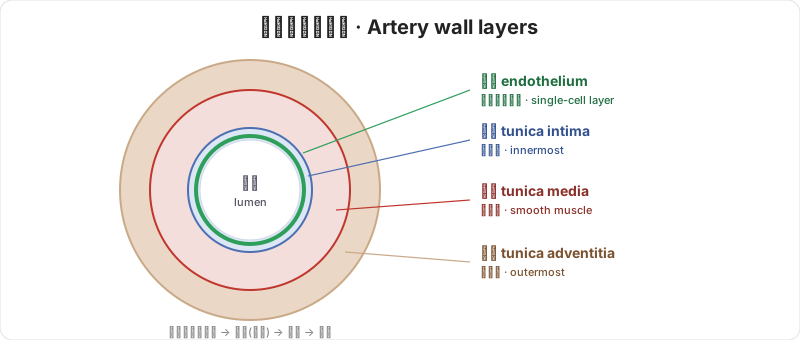
图 · 动脉壁由内向外分为内膜(内衬单层内皮)、中膜与外膜三层。[1]Tier 3StatPearls Publishing et al. Histology, Vascular. 2024https://www.ncbi.nlm.nih.gov/books/NBK554407/
内皮:一层细胞的大作用
内膜里那层直接铺在管腔内表面的细胞,就是内皮(endothelium,Endothelium内皮 · Endothelium/ˌɛndoʊˈθiːliəm/铺在血管内腔表面的单层内皮细胞,位于内膜最内侧;通过分泌一氧化氮等活性因子调节血管张力、抑制炎症与血栓,是维持血管稳态的关键界面。The single layer of endothelial cells lining the inner surface of blood vessels, forming the innermost part of the intima; by secreting bioactive factors such as nitric oxide it regulates vascular tone and limits inflammation and thrombosis, serving as a key interface for vascular homeostasis.🧩 词根拆解 / word rootsendo-内、里面 · inside/within希腊语 endon 内部+-thelium覆盖的细胞层(与 epithelium 上皮同源) · covering cell layer (cognate with epithelium)希腊语 thēlē 乳头/薄膜层)——它是环绕血管内腔的单层内皮细胞,下方衬着基底膜。[1]Tier 3StatPearls Publishing et al. Histology, Vascular. 2024https://www.ncbi.nlm.nih.gov/books/NBK554407/
别看它只有一层细胞,内皮却是维持血管稳态的关键。综述指出,内皮通过分泌多种活性因子,参与调节血管张力、平滑肌细胞增殖、免疫细胞黏附以及血管炎症。[2]Tier 3Wang, et al. Endothelial dysfunction: molecular mechanisms and clinical implications. MedComm 2024doi:10.1002/mco2.651 可以把健康的内皮想象成血管内壁一层"不粘锅涂层":既让血液顺滑流动、不易黏附,又主动向血管壁发出维持健康的信号。
一氧化氮:内皮发出的"放松"信号
内皮会释放多种"舒张因子",其中最重要的之一是一氧化氮(nitric oxide,NO一氧化氮 · Nitric oxideNO/ˈnaɪtrɪk ˈɒksaɪd/内皮释放的一种气体信号分子,是主要的“内皮舒张因子”;充足时具有抗氧化、抗炎、抗凝及促进血管舒张的作用,有助于对抗动脉粥样硬化。A gaseous signalling molecule released by the endothelium and a major 'endothelium-derived relaxing factor'; when sufficient, it has antioxidant, anti-inflammatory, anticoagulant, and vasodilatory actions that help counter atherosclerosis.)。[2]Tier 3Wang, et al. Endothelial dysfunction: molecular mechanisms and clinical implications. MedComm 2024doi:10.1002/mco2.651 综述指出,充足的一氧化氮具有抗氧化、抗炎、抗凝以及促进血管舒张的作用。[2]Tier 3Wang, et al. Endothelial dysfunction: molecular mechanisms and clinical implications. MedComm 2024doi:10.1002/mco2.651
换句话说,内皮分泌的一氧化氮既帮助血管适度放松、维持血流,又在一定程度上抑制炎症与血栓——这些恰恰都是动脉粥样硬化的对立面。
内皮功能失调:动脉粥样硬化的起点
当内皮受到损伤或功能失调时,这层"保护涂层"就会失效。综述指出,内皮功能失调会促使低密度脂蛋白(LDL)渗入内皮下层、在那里堆积并被氧化为氧化型 LDL(ox-LDL),从而启动动脉粥样硬化(atherosclerosis,Atherosclerosis动脉粥样硬化 · Atherosclerosis/ˌæθəroʊskləˈroʊsɪs/含胆固醇的脂质与炎症细胞在动脉内膜沉积、逐渐形成斑块使管腔狭窄、血管壁变硬的慢性过程。A chronic process in which cholesterol-rich lipids and inflammatory cells accumulate in the arterial intima, gradually forming plaques that narrow the lumen and stiffen the vessel wall.🧩 词根拆解 / word rootsathero-粥样、脂糊状(指斑块柔软的脂质核) · gruel/porridge (the soft fatty core)希腊语 athērē 粥/糊+scler(o)-硬化、变硬 · hardening希腊语 sklēros 硬+-osis(病理性)状态、过程 · abnormal condition/process希腊语 -ōsis)的级联反应。[2]Tier 3Wang, et al. Endothelial dysfunction: molecular mechanisms and clinical implications. MedComm 2024doi:10.1002/mco2.651
这一点与权威指南的核心判断一致:2019 年 ESC/EAS 血脂指南明确指出,动脉粥样硬化的关键起始事件,是低密度脂蛋白胆固醇(LDL-C)以及其他富含胆固醇的含 apoB 脂蛋白在动脉壁内的滞留。[3]Tier 1Mach, Francois et al. 2019 ESC/EAS guidelines for the management of dyslipidaemias: lipid modification to reduce cardiovascular risk. European Heart Journal 2020doi:10.1093/eurheartj/ehz455 也就是说,动脉粥样硬化的战场,正是从我们这节课讲的内膜和内皮开始的。
小结
- 动脉壁分内膜、中膜、外膜三层,各有不同成分与分工。[1]Tier 3StatPearls Publishing et al. Histology, Vascular. 2024https://www.ncbi.nlm.nih.gov/books/NBK554407/
- 内皮是内膜最内侧的单层细胞,通过分泌一氧化氮等因子维持血管张力、抑制炎症与血栓。[2]Tier 3Wang, et al. Endothelial dysfunction: molecular mechanisms and clinical implications. MedComm 2024doi:10.1002/mco2.651
- 一旦内皮功能失调、脂蛋白在血管壁内滞留,动脉粥样硬化便由此起步。[2]Tier 3Wang, et al. Endothelial dysfunction: molecular mechanisms and clinical implications. MedComm 2024doi:10.1002/mco2.651[3]Tier 1Mach, Francois et al. 2019 ESC/EAS guidelines for the management of dyslipidaemias: lipid modification to reduce cardiovascular risk. European Heart Journal 2020doi:10.1093/eurheartj/ehz455
⚕️ 本内容仅供健康科普与学习,不能替代专业医疗建议、诊断或治疗。
参考文献 / References
- Tier 3StatPearls Publishing et al. Histology, Vascular (2024) · link
- Tier 3Wang, et al. Endothelial dysfunction: molecular mechanisms and clinical implications. MedComm (2024) · doi:10.1002/mco2.651
- Tier 1Mach, Francois et al. 2019 ESC/EAS guidelines for the management of dyslipidaemias: lipid modification to reduce cardiovascular risk. European Heart Journal (2020) · doi:10.1093/eurheartj/ehz455