血液循环的原理
血液在身体里跑两条环路
上一课我们把心脏看作一个泵。这一课要看的是:这个泵把血液推到哪里去、又是怎么回来的。 血液循环其实是两条首尾相连的环路,由心脏的左右两半分别驱动。
第一条是肺循环(pulmonary circulation,Pulmonary circulation肺循环 · Pulmonary circulation/ˈpʌlmənɛri ˌsɜːrkjəˈleɪʃən/血液循环的“小环路”:右心室把缺氧血泵入肺动脉送往肺部,在肺泡周围的毛细血管把二氧化碳排出、把吸入的氧气摄入血液,随后富氧血经肺静脉回到左心房。The 'small loop' of circulation: the right ventricle pumps oxygen-poor blood through the pulmonary artery to the lungs, where carbon dioxide is released and freshly inhaled oxygen enters the blood at the capillaries around the air sacs; oxygen-rich blood then returns via the pulmonary veins to the left atrium.🧩 词根拆解 / word rootspulmon-肺 · lung拉丁语 pulmo 肺+-ary…的(形容词后缀) · adjective suffix+circul-环、循环 · circle拉丁语 circulus 小圆圈+-ation…的过程/作用 · process of):右心室把含氧较低的血泵入肺动脉, 送到肺部;在包裹肺泡的毛细血管里,血液排出二氧化碳、摄入我们吸进来的新鲜氧气,随后这些富氧血 经肺静脉回到左心房。[1]Tier 3InformedHealth.org / Institute for Quality et al. How does the blood circulatory system work?. 2019https://www.ncbi.nlm.nih.gov/books/NBK279250/ 简单说,肺循环是血液去肺里换气的一趟短途。
第二条是体循环(systemic circulation,Systemic circulation体循环 · Systemic circulation/sɪˈstɛmɪk ˌsɜːrkjəˈleɪʃən/血液循环的“大环路”:左心室把富氧血泵入主动脉,经各级动脉送到全身器官、组织和细胞,在毛细血管处交出氧气和养分、带走二氧化碳与代谢废物,再由静脉返回右心房。The 'large loop' of circulation: the left ventricle pumps oxygen-rich blood into the aorta and onward through arteries to the body's organs, tissues and cells; at the capillaries oxygen and nutrients are delivered and carbon dioxide and waste collected, and blood returns via the veins to the right atrium.🧩 词根拆解 / word rootssystem-(全身)系统、整体 · the whole body system希腊语 systēma 组合成的整体+-ic…的(形容词后缀) · adjective suffix+circul-环、循环 · circle拉丁语 circulus 小圆圈+-ation…的过程/作用 · process of):左心室把富氧血泵向全身, 让各器官、组织和细胞获得氧气和其他必需物质;血液在毛细血管处交出氧气和养分、带走二氧化碳和废物, 再经静脉返回右心房。[1]Tier 3InformedHealth.org / Institute for Quality et al. How does the blood circulatory system work?. 2019https://www.ncbi.nlm.nih.gov/books/NBK279250/ 体循环是血液给全身送货的一趟长途。
两条环路首尾相接:肺循环把血送回左心,左心启动体循环;体循环把血送回右心,右心又启动肺循环, 如此循环不息。[1]Tier 3InformedHealth.org / Institute for Quality et al. How does the blood circulatory system work?. 2019https://www.ncbi.nlm.nih.gov/books/NBK279250/
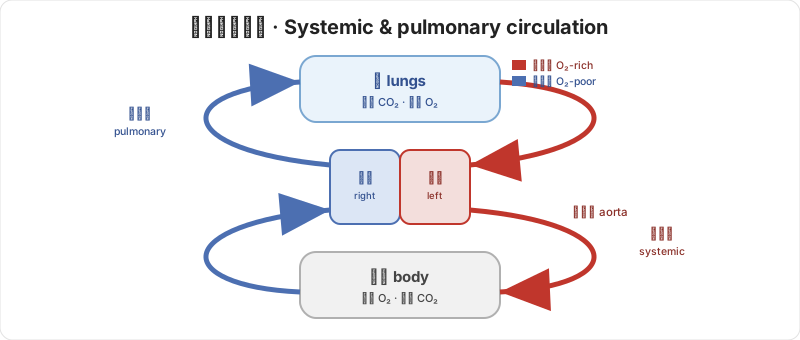
图 · 左心把富氧血经体循环送往全身,缺氧血回到右心后经肺循环到肺换气,再返回左心。[1]Tier 3InformedHealth.org / Institute for Quality et al. How does the blood circulatory system work?. 2019https://www.ncbi.nlm.nih.gov/books/NBK279250/
主动脉:体循环的主干
体循环的起点,是人体最大的一条动脉——主动脉(aorta,Aorta主动脉 · Aorta/eɪˈɔːrtə/人体最大的动脉,从左心室发出,是体循环的“主干”;它逐级分支成越来越小的动脉,把富氧血送往全身。The body's largest artery, arising from the left ventricle; it is the 'trunk' of the systemic circulation, branching into progressively smaller arteries that carry oxygen-rich blood throughout the body.🧩 词根拆解 / word rootsaort-主动脉 · aorta希腊语 aortē 悬挂之物(指大血管)+-a名词词尾 · noun ending)。它从左心室发出,像一棵 大树的“主干”,先分出大动脉,再逐级分成越来越小的血管,把富氧血送到全身各处。[1]Tier 3InformedHealth.org / Institute for Quality et al. How does the blood circulatory system work?. 2019https://www.ncbi.nlm.nih.gov/books/NBK279250/ 记住这个“主干”的形象,后面讲动脉粥样硬化、主动脉瓣狭窄时会反复用到。
血压是什么
当血液流过动脉时,会对动脉壁产生一股推力,这股力就是血压(blood pressure,BP血压 · Blood pressureBP/blʌd ˈprɛʃər/血液流经动脉时对动脉壁产生的压力;心脏收缩泵血时压力最高,心脏舒张、两次搏动之间时压力最低,读数以毫米汞柱(mmHg)表示。The force of blood pushing against the walls of the arteries as it flows; the pressure is highest when the heart contracts and pumps blood and lowest when the heart rests between beats, reported in millimetres of mercury (mmHg).🧩 词根拆解 / word rootsblood血液 · blood+pressure压力 · pressure拉丁语 pressura 压)—— 医学上定义为“血液对动脉壁的推力”。[2]Tier 3MedlinePlus, U.S. National Library of Medicine et al. High Blood Pressure. 2024https://medlineplus.gov/highbloodpressure.html 换个比喻:血压有点像自来水管里的水压, 心脏这台泵越用力、血管这条“水管”越不容易被撑开,管壁承受的压力就越大。
血压不是一个固定不变的数,而是随心跳一高一低地波动。[3]Tier 3National Heart, Lung, et al. High Blood Pressure --- What Is High Blood Pressure?. 2024https://www.nhlbi.nih.gov/health/high-blood-pressure
收缩压与舒张压
正因为血压会随心跳波动,一次血压读数会给出两个数字。
较高的那个是收缩压(systolic blood pressure,Systolic blood pressure收缩压 · Systolic blood pressure/sɪˈstɒlɪk blʌd ˈprɛʃər/血压读数中较高的那个数字,出现在心脏搏动、收缩泵血、血液对血管壁压力最高的时刻;书写时排在前面(斜杠之前)。The higher number in a blood-pressure reading, occurring when the heart beats and pumps blood and the pressure against the vessel walls is at its highest; it is written first (before the slash).🧩 词根拆解 / word rootssystol-心脏收缩(期) · contraction of the heart希腊语 systolē 收拢、收缩+-ic…的(形容词后缀) · adjective suffix):出现在心脏搏动、 收缩泵血的时刻,此时血液对血管壁的压力最高。[3]Tier 3National Heart, Lung, et al. High Blood Pressure --- What Is High Blood Pressure?. 2024https://www.nhlbi.nih.gov/health/high-blood-pressure
较低的那个是舒张压(diastolic blood pressure,Diastolic blood pressure舒张压 · Diastolic blood pressure/ˌdaɪəˈstɒlɪk blʌd ˈprɛʃər/血压读数中较低的那个数字,出现在两次心跳之间、心脏舒张充盈、血液对血管壁压力最低的时刻;书写时排在后面(斜杠之后)。The lower number in a blood-pressure reading, occurring between heartbeats when the heart rests and fills and the pressure against the vessel walls is at its lowest; it is written second (after the slash).🧩 词根拆解 / word rootsdiastol-心脏舒张(期) · relaxation/expansion of the heart希腊语 diastolē 张开、扩张+-ic…的(形容词后缀) · adjective suffix):出现在两次心跳 之间、心脏舒张充盈的时刻,此时血液对血管壁的压力落到最低。[3]Tier 3National Heart, Lung, et al. High Blood Pressure --- What Is High Blood Pressure?. 2024https://www.nhlbi.nih.gov/health/high-blood-pressure
书写时收缩压在前、舒张压在后,例如写成“120/80 mmHg”这样的形式(毫米汞柱,mmHg,是血压的常用单位)。[3]Tier 3National Heart, Lung, et al. High Blood Pressure --- What Is High Blood Pressure?. 2024https://www.nhlbi.nih.gov/health/high-blood-pressure (这里的 120/80 只是读数的书写格式示例,不是在说你的血压应该是多少——具体的正常范围与高血压分级 标准,要以权威高血压指南和你的医生判断为准。)
血压是怎么形成的
把上面两点合起来,就能理解血压是怎么“形成”的:心脏收缩时,用力把血泵进动脉,这股肌肉推力 产生了较高的收缩压;心脏舒张、在两次搏动之间重新充盈时,压力随之下降,形成较低的舒张压。[3]Tier 3National Heart, Lung, et al. High Blood Pressure --- What Is High Blood Pressure?. 2024https://www.nhlbi.nih.gov/health/high-blood-pressure 所以血压本质上是**“心脏这台泵”与“动脉这套管道”共同作用的结果**——泵的力量和血管的状态,都会影响它。[3]Tier 3National Heart, Lung, et al. High Blood Pressure --- What Is High Blood Pressure?. 2024https://www.nhlbi.nih.gov/health/high-blood-pressure
理解了这一点,就为后面的内容打下了基础:血管壁的结构与弹性(下一课)、以及长期偏高的血压为什么会 伤害血管,都会回到“压力”这个概念上来。
⚕️ 本内容仅供健康科普与学习,不能替代专业医疗建议、诊断或治疗。
参考文献 / References
- Tier 3InformedHealth.org / Institute for Quality et al. How does the blood circulatory system work? (2019) · link
- Tier 3MedlinePlus, U.S. National Library of Medicine et al. High Blood Pressure (2024) · link
- Tier 3National Heart, Lung, et al. High Blood Pressure --- What Is High Blood Pressure? (2024) · link