他汀:机制、获益与副作用的事实
他汀是什么
他汀(statin,Statin他汀(他汀类药物) · Statin/ˈstætɪn/一大类通过抑制 HMG-CoA 还原酶来降低胆固醇合成、进而降低血中 LDL-C 的药物,是调脂治疗的基石类药物;代表药物有阿托伐他汀、瑞舒伐他汀等。A major class of drugs that lower cholesterol synthesis by inhibiting HMG-CoA reductase, thereby lowering blood LDL-C; the cornerstone class of lipid-lowering therapy, with agents such as atorvastatin and rosuvastatin.🧩 词根拆解 / word rootsstat-使停止、抑制(源自 -stat 抑制剂命名) · to halt/inhibit (from the -stat drug-class suffix)希腊语 statos 使静止+-in(药物/化合物名词后缀) · noun suffix for a drug/compound)是一大类降胆固醇药物的统称,如阿托伐他汀、瑞舒伐他汀等。 《中国血脂管理指南(2023 年)》把他汀称为"调脂药物治疗的基石",并指出中等强度他汀是中国人群 降脂治疗的首选策略。[1]Tier 1Joint Committee for the Development of Chinese Guidelines for the Management of Blood Lipids et al. 2023 Chinese guideline for lipid management (English full text). Frontiers in Pharmacology 2023doi:10.3389/fphar.2023.1190934 换句话说,在大多数需要药物降低低密度脂蛋白胆固醇 (low-density lipoprotein,LDL低密度脂蛋白 · Low-density lipoproteinLDL/ˌloʊ ˈdɛnsɪti ˌlaɪpoʊˈproʊtiːn/运输胆固醇进入外周组织的脂蛋白颗粒;其携带的胆固醇称 LDL-C,是动脉粥样硬化的核心致病因素,俗称“坏胆固醇”。The lipoprotein particle that carries cholesterol to peripheral tissues; its cholesterol cargo (LDL-C) is a central causal driver of atherosclerosis, popularly called 'bad cholesterol'.🧩 词根拆解 / word rootslow-density低密度 · low density+lipo-脂、脂肪 · fat希腊语 lipos 脂肪+protein蛋白质 · protein希腊语 prōtos 第一/首要,其携带的胆固醇即 LDL-C)的情况下,他汀通常是 第一选择。
机制:拦住胆固醇的"生产线"
人体大部分胆固醇(cholesterol,Cholesterol胆固醇 · Cholesterol/kəˈlɛstərɒl/一种脂质分子,是细胞膜、类固醇激素和胆汁酸的必需成分;因不溶于水,需由脂蛋白在血液中运输。A lipid molecule essential for cell membranes, steroid hormones, and bile acids; being water-insoluble, it must be transported in the blood by lipoproteins.🧩 词根拆解 / word rootschole-胆汁(最早从胆结石中分离) · bile希腊语 kholē 胆汁+stere(o)-固体、坚硬 · solid/stiff希腊语 stereos 固体+-ol醇(化学后缀,表示这是一种醇) · an alcohol (chemistry))不是吃进来的,而是自身(主要在肝脏) 合成的。这条合成"流水线"上有一个限速酶叫 HMG-CoA 还原酶(HMG-CoA reductase, HMGCRHMG-CoA 还原酶(3-羟基-3-甲基戊二酰辅酶A还原酶) · HMG-CoA reductaseHMGCR/ˌeɪtʃ ɛm dʒiː koʊ eɪ rɪˈdʌkteɪs/胆固醇合成通路中的限速酶,全称 3-羟基-3-甲基戊二酰辅酶A还原酶;他汀正是通过抑制它来减少肝脏胆固醇合成。The rate-limiting enzyme of the cholesterol-synthesis pathway (3-hydroxy-3-methylglutaryl coenzyme A reductase); statins act by inhibiting it to reduce hepatic cholesterol synthesis.🧩 词根拆解 / word rootsHMG-CoA3-羟基-3-甲基戊二酰辅酶A(酶的底物) · 3-hydroxy-3-methylglutaryl coenzyme A (the enzyme's substrate)+reduct-还原(催化还原反应) · reduction (catalyses a reduction reaction)拉丁语 reducere 带回/还原+-ase酶(酶类命名后缀) · enzyme (suffix naming an enzyme))。他汀的作用正是抑制这个酶,减少肝细胞内胆固醇的合成。[1]Tier 1Joint Committee for the Development of Chinese Guidelines for the Management of Blood Lipids et al. 2023 Chinese guideline for lipid management (English full text). Frontiers in Pharmacology 2023doi:10.3389/fphar.2023.1190934
肝细胞里胆固醇一少,就会"感到缺货",于是在细胞表面增加 LDL 受体(LDL receptor, LDLRLDL 受体(低密度脂蛋白受体) · LDL receptorLDLR/ˌɛl diː ˈɛl rɪˈsɛptər/位于细胞(尤其肝细胞)表面、专门识别并摄取含 apoB 的 LDL 颗粒的受体;其数量增加可加速从血液中清除 LDL,是他汀降 LDL-C 的关键环节。A receptor on cell surfaces (especially hepatocytes) that recognises and takes up apoB-containing LDL particles; increasing its number accelerates LDL clearance from blood and is the key step by which statins lower LDL-C.🧩 词根拆解 / word rootsLDL低密度脂蛋白 · low-density lipoprotein+receptor受体(接收/结合分子的蛋白) · a protein that receives/binds a molecule拉丁语 recipere 接收)的数量,把更多血液里的 LDL 颗粒抓回肝脏、加速清除。最终结果就是血中 LDL-C 下降。[1]Tier 1Joint Committee for the Development of Chinese Guidelines for the Management of Blood Lipids et al. 2023 Chinese guideline for lipid management (English full text). Frontiers in Pharmacology 2023doi:10.3389/fphar.2023.1190934 这也是他汀对抗动脉粥样硬化(atherosclerosis, Atherosclerosis动脉粥样硬化 · Atherosclerosis/ˌæθəroʊskləˈroʊsɪs/含胆固醇的脂质与炎症细胞在动脉内膜沉积、逐渐形成斑块使管腔狭窄、血管壁变硬的慢性过程。A chronic process in which cholesterol-rich lipids and inflammatory cells accumulate in the arterial intima, gradually forming plaques that narrow the lumen and stiffen the vessel wall.🧩 词根拆解 / word rootsathero-粥样、脂糊状(指斑块柔软的脂质核) · gruel/porridge (the soft fatty core)希腊语 athērē 粥/糊+scler(o)-硬化、变硬 · hardening希腊语 sklēros 硬+-osis(病理性)状态、过程 · abnormal condition/process希腊语 -ōsis)的根本着力点——把致病的 LDL 降下来。
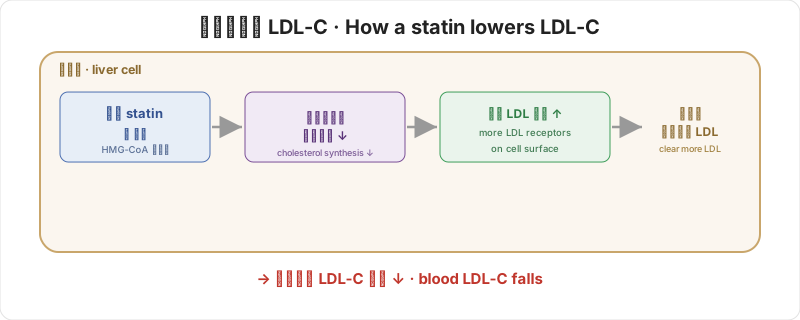
图 · 他汀抑制肝细胞内的 HMG-CoA 还原酶,使肝内胆固醇合成下降,肝细胞随之上调 LDL 受体、从血液清除更多 LDL,最终血 LDL-C 下降。[1]Tier 1Joint Committee for the Development of Chinese Guidelines for the Management of Blood Lipids et al. 2023 Chinese guideline for lipid management (English full text). Frontiers in Pharmacology 2023doi:10.3389/fphar.2023.1190934
获益:不是"化验单好看",而是硬终点
他汀真正的价值,在于减少会致残致死的"硬事件",而不仅仅是让化验单数字变好。
胆固醇治疗试验协作组(CTT)汇总了 26 项随机对照试验、约 17 万名参与者的数据,发现:他汀每把 LDL-C 降低 1 mmol/L(约 39 mg/dL),此后主要血管事件(冠心病死亡、非致死性心肌梗死、卒中、 冠脉血运重建)就减少约五分之一——风险比为 0.78,即相对风险下降约 22%。[2]Tier 2Cholesterol Treatment Trialists' (CTT) Collaboration et al. Efficacy and safety of more intensive lowering of LDL cholesterol: a meta-analysis of data from 170,000 participants in 26 randomised trials. The Lancet 2010doi:10.1016/S0140-6736(10)61350-5 降得越多,获益越大,这对动脉粥样硬化性心血管疾病(atherosclerotic cardiovascular disease, ASCVD动脉粥样硬化性心血管疾病 · Atherosclerotic cardiovascular diseaseASCVD/ˌæθəroʊskləˈrɒtɪk ˌkɑːrdioʊˈvæskjələr/由动脉粥样硬化引起的一类疾病的总称,包括冠心病、缺血性卒中、外周动脉疾病等。An umbrella term for diseases caused by atherosclerosis, including coronary heart disease, ischaemic stroke, and peripheral artery disease.)的预防意义重大。[2]Tier 2Cholesterol Treatment Trialists' (CTT) Collaboration et al. Efficacy and safety of more intensive lowering of LDL cholesterol: a meta-analysis of data from 170,000 participants in 26 randomised trials. The Lancet 2010doi:10.1016/S0140-6736(10)61350-5 同一分析还显示,降 LDL-C 并未增加癌症 的发生风险。[2]Tier 2Cholesterol Treatment Trialists' (CTT) Collaboration et al. Efficacy and safety of more intensive lowering of LDL cholesterol: a meta-analysis of data from 170,000 participants in 26 randomised trials. The Lancet 2010doi:10.1016/S0140-6736(10)61350-5
副作用要客观看:既不夸大,也不回避
他汀总体上是安全的药物,但确实存在需要了解的副作用。关键是分清"真实发生率"与"被误归因"的 部分。
肌肉相关症状
最常被提到的是肌肉症状。中国指南给出的肌肉相关不良反应发生率为:随机对照试验中约 1%–5%, 观察性研究中约 5%–10%,表现从肌痛(myalgia,Myalgia肌痛 · Myalgia/maɪˈældʒə/肌肉疼痛或酸痛,是他汀最常被报告的肌肉相关症状;多数较轻,且相当一部分实为反安慰剂效应而非药物本身所致。Muscle pain or ache; the most commonly reported statin muscle symptom—usually mild, and in a large share of cases actually a nocebo effect rather than caused by the drug itself.🧩 词根拆解 / word rootsmy(o)-肌肉 · muscle希腊语 mys 肌肉+-algia疼痛 · pain希腊语 algos 痛,即肌肉酸痛)到肌炎、 肌病(myopathy,Myopathy肌病 · Myopathy/maɪˈɒpəθi/肌肉本身的疾病,通常指伴有肌肉无力或疼痛并可有肌酸激酶升高的肌肉损伤;是他汀肌肉不良反应谱中比单纯肌痛更重的一端。Disease of muscle itself, typically muscle injury with weakness or pain and possible creatine-kinase elevation; the more severe end of the statin muscle adverse-effect spectrum beyond simple myalgia.🧩 词根拆解 / word rootsmy(o)-肌肉 · muscle希腊语 mys 肌肉+-pathy疾病、病变 · disease/disorder希腊语 pathos 疾病/受苦)不等。[1]Tier 1Joint Committee for the Development of Chinese Guidelines for the Management of Blood Lipids et al. 2023 Chinese guideline for lipid management (English full text). Frontiers in Pharmacology 2023doi:10.3389/fphar.2023.1190934
但有一个反直觉却重要的事实:很多"吃他汀后的肌肉不适",其实并非他汀本身所致,而是反安慰剂效应 (nocebo effect,Nocebo effect反安慰剂效应 · Nocebo effect/noʊˈsiːboʊ ɪˈfɛkt/与安慰剂效应相反:因预期某种治疗会带来不适,而真的体验到副作用症状,即使所服的是无活性物质。在他汀肌肉症状中占很大比重。The opposite of the placebo effect: experiencing adverse symptoms because one expects a treatment to cause harm, even when the substance taken is inactive; it accounts for a large share of statin muscle symptoms.🧩 词根拆解 / word rootsnocebo“我将受害”(拉丁语,与 placebo“我将取悦”相对) · 'I shall harm' (Latin; contrast placebo 'I shall please')拉丁语 nocere 伤害+effect效应、作用 · effect)——因为预期会不舒服,就真的感觉到了不舒服。 SAMSON 交叉试验让曾因副作用停药者分别服用他汀、安慰剂和不服药:他汀月份的症状评分为 16.3、 安慰剂月份为 15.4、不服药月份仅为 8.0(满分 100 的视觉模拟评分)。[3]Tier 2Wood, Frances A. et al. Side effect patterns in a crossover trial of statin, placebo, and no treatment (SAMSON). Journal of the American College of Cardiology 2021doi:10.1016/j.jacc.2021.07.022 由此 算得的"反安慰剂比值"为 0.90,意味着约 90% 的症状在仅服用安慰剂时同样出现。[3]Tier 2Wood, Frances A. et al. Side effect patterns in a crossover trial of statin, placebo, and no treatment (SAMSON). Journal of the American College of Cardiology 2021doi:10.1016/j.jacc.2021.07.022 这提示:出现肌肉不适时,先别急着断定是他汀的错,更不宜自行停药,而应与医生沟通评估。
横纹肌溶解(罕见但需警惕)
肌肉副作用中最严重的是横纹肌溶解(rhabdomyolysis,Rhabdomyolysis横纹肌溶解 · Rhabdomyolysis/ˌræbdoʊmaɪˈɒlɪsɪs/骨骼(横纹)肌细胞大量崩解、内容物(如肌红蛋白)释放入血、可损伤肾脏的严重情况;是他汀肌肉副作用中最严重但罕见的一种。A serious condition in which skeletal (striated) muscle cells break down massively, releasing contents such as myoglobin into the blood and potentially damaging the kidneys; the most severe but rare statin muscle adverse effect.🧩 词根拆解 / word rootsrhabdo-横纹(指骨骼肌的横纹外观) · rod/striped (the striated look of skeletal muscle)希腊语 rhabdos 杆/条+my(o)-肌肉 · muscle希腊语 mys 肌肉+-lysis溶解、崩解 · breakdown/dissolution希腊语 lysis 松解)——肌肉细胞 大量崩解、可损伤肾脏。中国指南明确指出这种情况"罕见"。[1]Tier 1Joint Committee for the Development of Chinese Guidelines for the Management of Blood Lipids et al. 2023 Chinese guideline for lipid management (English full text). Frontiers in Pharmacology 2023doi:10.3389/fphar.2023.1190934 它虽严重,但 发生率很低,出现无法解释的严重肌痛、乏力或酱油色尿时应及时就医。
新发糖尿病(小幅信号)
他汀会小幅增加新发糖尿病的风险。一项汇总 13 项试验、约 9.1 万人的荟萃分析显示,他汀使新发 糖尿病风险增加约 9%(比值比 1.09,95% 置信区间 1.02–1.17);换算成绝对量,约每 255 人服用他汀 4 年才多出 1 例糖尿病。[4]Tier 2Sattar, Naveed et al. Statins and risk of incident diabetes: a collaborative meta-analysis of randomised statin trials. The Lancet 2010doi:10.1016/S0140-6736(09)61965-6 该研究作者强调:这一风险无论从绝对值看,还是 与他汀减少冠脉事件的获益相比,都很小,对中高危或已患心血管病的人群不应因此改变用药。[4]Tier 2Sattar, Naveed et al. Statins and risk of incident diabetes: a collaborative meta-analysis of randomised statin trials. The Lancet 2010doi:10.1016/S0140-6736(09)61965-6
肝酶升高
部分人服用他汀后会出现转氨酶(肝酶)升高。中国指南给出的发生率约为 0.5%–3.0%,且呈剂量依赖 性。[1]Tier 1Joint Committee for the Development of Chinese Guidelines for the Management of Blood Lipids et al. 2023 Chinese guideline for lipid management (English full text). Frontiers in Pharmacology 2023doi:10.3389/fphar.2023.1190934 多数为轻度、可逆,通常不需因此停药,具体由医生判断。
一句话权衡
对多数有明确适应证的人来说,他汀带来的心血管获益(减少约五分之一的主要血管事件)[2]Tier 2Cholesterol Treatment Trialists' (CTT) Collaboration et al. Efficacy and safety of more intensive lowering of LDL cholesterol: a meta-analysis of data from 170,000 participants in 26 randomised trials. The Lancet 2010doi:10.1016/S0140-6736(10)61350-5 明显大于其小幅、可管理的风险(如约每 255 人 4 年多 1 例糖尿病)。[4]Tier 2Sattar, Naveed et al. Statins and risk of incident diabetes: a collaborative meta-analysis of randomised statin trials. The Lancet 2010doi:10.1016/S0140-6736(09)61965-6 是否用、用哪种、用多大剂量,需结合个人风险由医生决定。
⚕️ 本内容仅供健康科普与学习,用药请遵医嘱,不能替代专业医疗建议。
参考文献 / References
- Tier 1Joint Committee for the Development of Chinese Guidelines for the Management of Blood Lipids et al. 2023 Chinese guideline for lipid management (English full text). Frontiers in Pharmacology (2023) · doi:10.3389/fphar.2023.1190934
- Tier 2Cholesterol Treatment Trialists' (CTT) Collaboration et al. Efficacy and safety of more intensive lowering of LDL cholesterol: a meta-analysis of data from 170,000 participants in 26 randomised trials. The Lancet (2010) · doi:10.1016/S0140-6736(10)61350-5
- Tier 2Wood, Frances A. et al. Side effect patterns in a crossover trial of statin, placebo, and no treatment (SAMSON). Journal of the American College of Cardiology (2021) · doi:10.1016/j.jacc.2021.07.022
- Tier 2Sattar, Naveed et al. Statins and risk of incident diabetes: a collaborative meta-analysis of randomised statin trials. The Lancet (2010) · doi:10.1016/S0140-6736(09)61965-6